It usually starts the same way. A big southerly comes through, the rain falls sideways for an hour, and water pours over the front of the gutter instead of down the downpipe. You get the ladder out the next weekend and pull out a bucket of soggy gum leaves, gum nuts and something that has started to grow. Then you look up the gutter guard cost and get a dozen different answers, none of them about your house.
We fit gutter guard on homes right around Shellharbour, from the leafy streets near Blackbutt Reserve to the salt-exposed rooflines at Shell Cove and Warilla. This post explains what actually drives the price, where the cheap options fall short, and when gutter guard is honestly not worth paying for.
Why a per-metre price off the internet rarely matches your quote
Most online price guides quote a figure per metre of gutter. That number is real enough for the mesh itself. It just leaves out most of what you pay a roofer for.
Two houses with the same length of gutter can end up with very different quotes. One is a single-storey brick veneer in Oak Flats with a low-pitch Colorbond roof and sound gutters. The other is a two-storey tile roof in Albion Park with a valley full of debris and a back gutter that has rusted through at the joins. Same metres. Very different jobs.
So rather than give you a number that might be wrong for your roof, here is what we look at when we price it.
Five things that set the price on your roof
1. How long, how high and how easy to reach
Length is the starting point, but height and access matter just as much. A second storey means more safety gear and more time on the roof. Steep tile roofs, tight side passages and roofs over a pool or glass room all slow the job down. Labour is usually the larger share of the bill, not the mesh.
2. Tile or metal roof
This one surprises people. On a corrugated metal roof the mesh is fixed along the sheet using purpose-made clips or saddles that follow the profile, so the screws stay in the high ribs. It is fairly quick work.
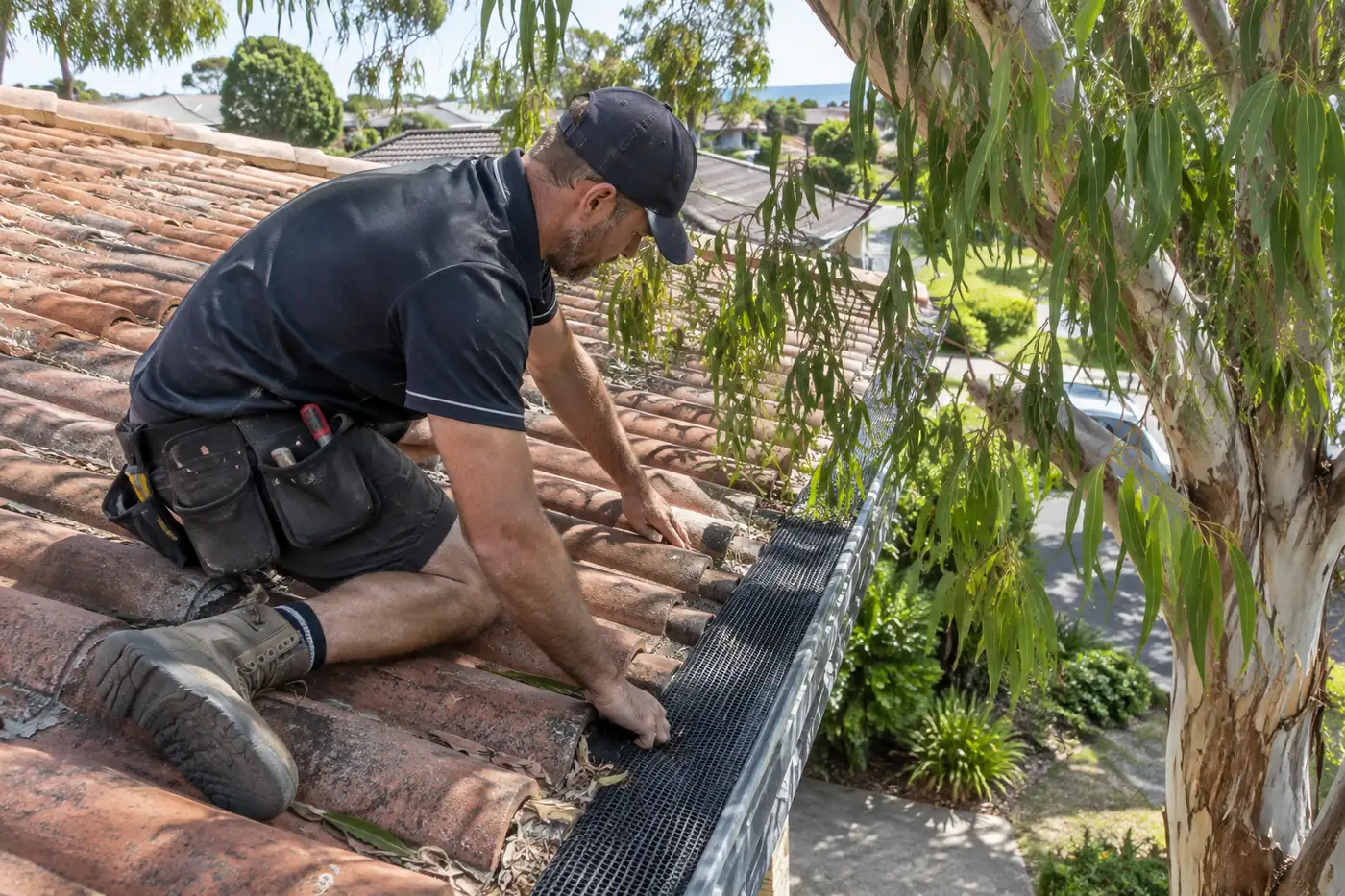
Tile roofs take longer. The mesh has to tuck under the bottom row of tiles or be shaped to follow the tile profile, and every tile we lift has to go back down exactly as it was. Done carelessly, it can leave gaps that let wind driven rain under the tiles, which is the opposite of what you are paying for.
3. What the mesh is made of
Plastic mesh is the cheapest. In our experience it goes brittle in the sun, starts to crack and sag after a few summers, and offers nothing against embers.
Aluminium mesh costs more but suits most local homes. It does not rust, it holds its shape, and it comes in Colorbond colours so it blends in with the roof and gutters. For homes close to the water, such as those along the coast at Barrack Heights or around Lake Illawarra, a marine grade aluminium mesh is the one we recommend. Salt air is hard on steel products and cheap fixings, and a guard that stains your roof with rust is not a good trade.
4. The condition of the gutters underneath
We will not fit new mesh over gutters that are already failing. If the back of the gutter has rusted, the joins are leaking or the fall is wrong so water sits in one spot, guard will only hide the problem for a while. In that case it makes more sense to replace the gutters first and fit the guard in the same visit, while roof access is already set up. Our breakdown of what goes into a gutter replacement price covers that side of the job.
5. Valleys and bushfire areas
Roof valleys (the channels where two roof slopes meet) collect leaves just like gutters do, and they are often where overflows start. Adding valley guard adds to the job but is often worth it on tile roofs under trees.
If your home is on bushfire prone land, the guard needs to be non-combustible metal mesh, not plastic. That matters for properties backing onto bushland on the edges of the Shellharbour area. Your council or the NSW Rural Fire Service can tell you whether your block is mapped as bushfire prone.
What you give up with a hardware store kit
A DIY kit is clearly cheaper on the receipt, and for a flat single-storey roof with a confident owner it can work. The trade-offs are worth knowing before you buy.
Brush and foam inserts sit inside the gutter. Brush guards catch twigs and gum leaves in the bristles, and foam can hold moisture and end up growing weeds. Clip-on plastic mesh is easy to fit but, as above, does not last in our sun. Most kits also assume a metal roof. Getting mesh to sit properly on a tile roof without disturbing the tiles is the hard part, and it is the part DIY kits tend to skip.
Then there is the ladder. Falls from ladders and roofs put plenty of people in hospital every year, and a two-storey gutter is not a good place to learn.
Is gutter guard worth it for your house?
It comes down to what is growing near your roof.
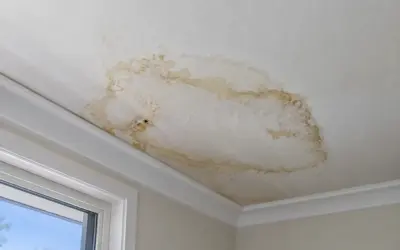
If you have eucalypts, she-oaks or a neighbour’s big tree hanging over the roofline, gutter guard usually pays its way. You stop climbing up to clean the gutters several times a year, overflows during heavy rain become far less likely, and water stops backing up under the roof edge where it can rot the fascia boards. Overflowing gutters are also behind a lot of the ceiling leaks people assume are a roof problem, which we cover in our guide to why roofs leak.
If there are no trees anywhere near your house, it is harder to justify. Your gutters will mostly collect dust and grit, and a yearly check may be all they need. We would rather tell you that than sell you something you do not need.
The downsides nobody puts in the brochure
Gutter guard cuts maintenance. It does not get rid of it.
Fine dust, sand and grit washed off the roof still get through the mesh and settle in the bottom of the gutter. Leaves can sit on top of the mesh in calm weather until wind or rain moves them on. Most homes with guard still benefit from a check and a hose out every year or two.
A poor install causes its own problems. Mesh fixed too tightly can lift tiles. Steel screws in a coastal suburb can rust and leave streaks down the roof. Mesh that is not secured properly can lift in a strong wind. All of these come down to how it is fitted rather than the product, which is why it pays to have a roofer do it.
How we price a gutter guard job
Roofing Shellharbour is led by Ryan Bruce, who has more than 10 years of experience on tile and metal roofs. We work on what we call a decision-first approach: we look at the roof, tell you what we found and what your options are, and leave the decision with you.
For gutter guard, that means we check the condition of your gutters and valleys first, measure the run, note the roof type and access, and look at what trees are around. You get a quote that covers the mesh, the fixings and the labour for your actual roof. If we think the gutters need replacing first, or that you do not need guard at all, we will say so. You can see what the job involves on our gutter guard installation page.
Common questions about gutter guard cost
What is the average cost for gutter guards?
There is no honest average that fits every house, because labour often costs more than the mesh. The biggest factors are the length of gutter, the height of the house, whether the roof is tile or metal and which mesh you choose. A measured quote for your roof is the only number worth relying on.
Are gutter guards actually worth it?
For homes under or near trees, usually yes. They cut down on ladder work, reduce overflows in heavy rain and protect the fascia from water damage. For homes with no trees nearby, a yearly gutter clean may be the cheaper option.
Is a hardware store gutter guard kit good enough?
It can be for a simple single-storey metal roof. Plastic mesh, brush and foam products tend to wear out or clog faster than aluminium mesh, and most kits are not designed to sit properly on a tile roof. Factor in the ladder risk too, especially on a two-storey home.
What are the downsides of gutter guards?
Fine debris still gets through, so gutters need an occasional check and flush. Leaves can sit on top of the mesh until wind or rain clears them. A poor install can lift tiles or leave rust stains if the wrong fixings are used.
Can gutter guard go on a tile roof?
Yes, but it takes more care than a metal roof. The mesh has to tuck under or follow the bottom row of tiles without leaving gaps for rain to blow in. That extra work is the main reason tile roofs usually cost more to guard.
Do I still need to clean my gutters with gutter guard?
Much less often, but yes. We suggest a quick inspection and hose out every year or two, and after a big storm if you notice overflow. It is a far smaller job than scooping out a full gutter.
Get a straight answer for your roof
If you are tired of cleaning gutters or watching them overflow in heavy rain, we can measure up and tell you what guard will cost on your home, and whether it is the right fix. Have a look at our gutter guard service or call us on (02) 4215 8188.