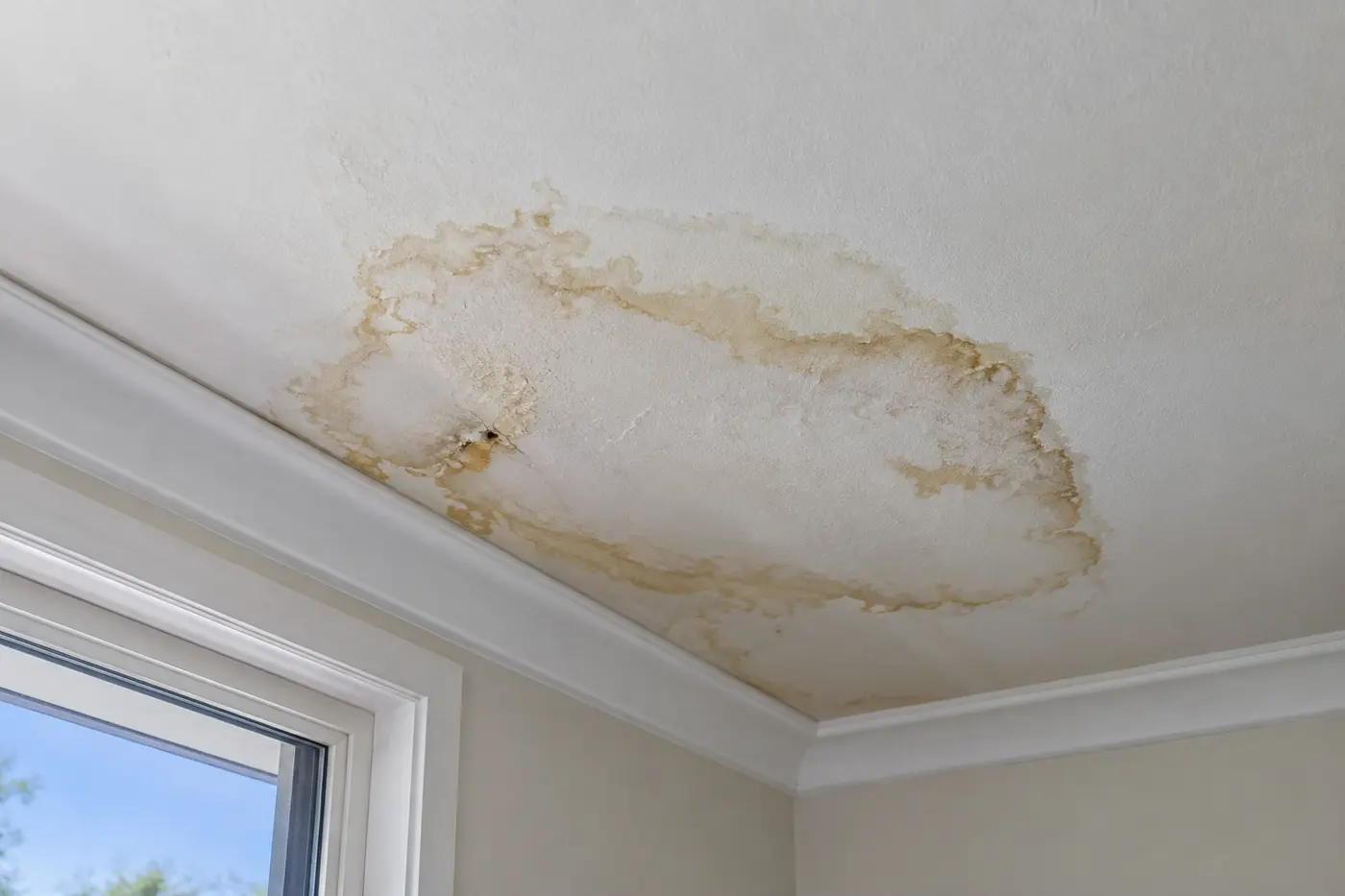
You notice it while lying on the couch: a yellowish brown ring on the ceiling that definitely wasn’t there last month. The first question is always the same. Is this a roof leak or a plumbing problem, and who do I ring? A water stain on the ceiling can come from either, and calling the wrong trade first costs you time while the plasterboard keeps soaking.
We get this call a lot around Shellharbour, and a fair share of the time the answer isn’t the roof. Here’s how we sort one from the other, and what you can check yourself before anyone climbs a ladder.
The weather is your best clue
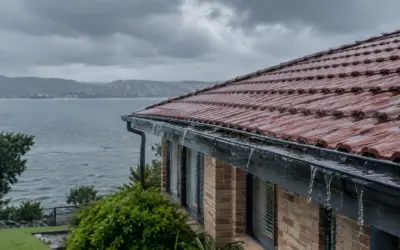
Roof leaks need rain. That sounds obvious, but it’s the most useful test you have. If the stain appeared or grew straight after a wet spell, and it stays the same size through dry weeks, water is almost certainly getting in from outside.
Plumbing leaks don’t care about the forecast. A stain that keeps darkening during a dry fortnight, or gets wetter after someone showers, points to a pipe, a fitting or a waterproofing failure. Rain doesn’t come into it.
Pay attention to which kind of rain, too. Some roof leaks only show up when the wind drives rain hard from one direction, which is common on the coast here. Gentle rain does nothing; a strong southerly blowing sideways into the ridge or a wall flashing does. If your stain only grows in wild weather, tell your roofer that. It narrows the search a lot.
Where the stain sits tells you a lot
Location is the second clue. Have a look at what is above the stain and what is nearby.
- Next to a bathroom, laundry or kitchen wall: plumbing moves up the list, especially if it’s close to a shower or a sink.
- Under a valley, ridge line or skylight: classic roof territory.
- Around a flue, vent pipe or solar hot water unit: often the flashing or seal where that thing passes through the roof.
- Along an external wall, near the cornice: could be an overflowing gutter backing up under the roof edge.
One thing catches people out. Water on a roof rarely drops straight down. It can run along a batten or the top of a ceiling joist for a metre or more before it finds a low point, so the stain might be well away from the actual hole. That’s why a stain under the hallway can turn out to be a cracked tile two rooms over.
Things in the roof space that aren’t the roof
Your roof space is busier than most people think, and a few things up there can leak with no help from the weather.
Hot and cold water pipes often run through the ceiling, particularly to a hot water unit on the roof. Ducted air conditioning units sit in the roof space and produce condensation that drains through a tray and a line; if the line blocks, the tray overflows onto the ceiling. In two storey homes, the floor above a stain may be a bathroom, and a failed shower seal shows up downstairs as a ring that grows every morning.
Then there’s condensation. A bathroom exhaust fan that vents into the roof space instead of outside pushes warm wet air up there every day. On a cold night it condenses on the underside of the roof, especially under metal sheeting without insulation, and drips back down. We see this more in winter. It’s often the answer to the question “why do I have a water stain but no leak?”
A few checks you can do safely
You don’t need to go on the roof to narrow it down. Please don’t, particularly when it’s wet. These checks are all done from the ground or inside:
- Draw a light pencil line around the edge of the stain and date it. Check after the next rain and after a dry week.
- Turn off every tap in the house and read the water meter, then read it again an hour later. If it moved, you have a plumbing leak somewhere.
- Look up at the gutters above the stain during rain. Water spilling over the front edge or pouring out the back is a sign they’re blocked or failing.
- If you have a manhole and can do it safely, look into the roof space with a torch during or just after rain. Fresh drips, damp timber or a wet patch on the insulation tell you a lot.
If the meter moves, call a plumber first. If it doesn’t and the stain follows the rain, it’s a roofer’s job.
When it is the roof, these are the usual culprits
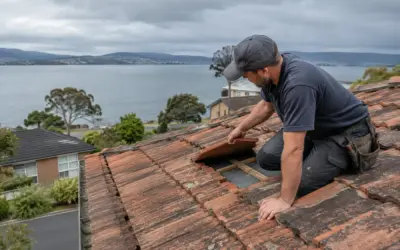
On tile roofs we most often find cracked or slipped tiles, worn mortar under the ridge capping, and valleys clogged with leaves so water spills over the side. On metal roofs it’s usually rusted or lifted screws, corroded sheets near the coast, or flashings that have pulled away from a wall. We go through the full list in our guide on the common reasons a roof starts leaking.
Finding the exact entry point is the part that takes skill, because of the way water travels. We walk the roof, check the roof space and trace the water back to where it starts. Our post on how we track down a hidden leak explains that step by step.
Once we know the cause, the fix is often small: a few tiles replaced, a flashing resealed, a section of ridge repointed. Our roof leak repairs for tile and metal roofs are aimed at fixing the real cause, not painting sealant over the symptom and hoping.
When a stain becomes urgent
An old, dry stain that hasn’t changed in years is usually a past problem that was fixed. It still deserves a look, but it isn’t an emergency.
Some signs mean you should act the same day. A ceiling that sags or bulges is holding water and can come down. Water near light fittings or downlights is a safety issue, so turn that circuit off at the switchboard. Dripping, a musty smell or black mould spots mean water has been there long enough to cause damage behind the surface. If you see sagging, keep people out of the room and put a bucket under the lowest point.
Why the roof is worth ruling out early
Ryan Bruce, who leads our team, has spent more than 10 years on tile and metal roofs, and a lot of that time has been spent fixing leaks that started small. A roof leak left for a season can rot battens, ruin insulation and stain several ceilings, not just one. Ruling the roof in or out early saves you paying for the same repair twice.
We work on a decision first basis. We’ll tell you what we found, show you where the water is getting in, and explain your options. If the roof is fine and the problem is a pipe, we’ll say so.
Straight answers about ceiling water stains
Is a ceiling leak a plumbing issue?
Sometimes, but not always. If the stain grows in dry weather or after showers and your water meter moves with all taps off, it’s likely plumbing. If it only appears or spreads after rain, the roof, gutters or flashings are the usual source.
Why do I have water stains on my ceiling but no leak?
Condensation is the most common reason. Warm, moist air from a bathroom fan venting into the roof space, or a ducted air conditioner’s drain tray overflowing, can wet the ceiling with no roof or pipe failure at all. An old stain from a leak that was already fixed can also look new once you finally notice it.
When should I worry about a water stain on the ceiling?
Worry when it’s growing, damp to touch, sagging, near a light fitting, or comes with a musty smell or mould. Those signs mean water is still getting in or has sat long enough to cause damage. A dry stain that hasn’t changed in a long time is less urgent but still worth checking.
My ceiling has a water stain after a leak. What should I do?
Fix the source first, then the ceiling. Painting over a stain before the leak is sorted just hides the evidence. Once the leak is repaired, let the plasterboard dry fully, then seal the area with a stain blocking primer before repainting.
Does the ceiling need to be replaced after water damage?
Not always. A small stain on plasterboard that dried out quickly can usually be sealed and painted. If the sheet is soft, sagging, crumbling or growing mould, that section needs to be cut out and replaced.
How much does it cost to repair a water leak from a ceiling?
It depends entirely on the cause. A few cracked tiles or a resealed flashing is a much smaller job than replacing rusted sheets or rebuilding a valley, and the ceiling repair is a separate cost on top. We give a free quote once we’ve found where the water is actually coming in.
If there’s a stain on your ceiling and the weather test points to the roof, give us a call on (02) 4215 8188 or book a free quote. We’ll find where the water is getting in and arrange a repair that stops it, anywhere around Shellharbour.