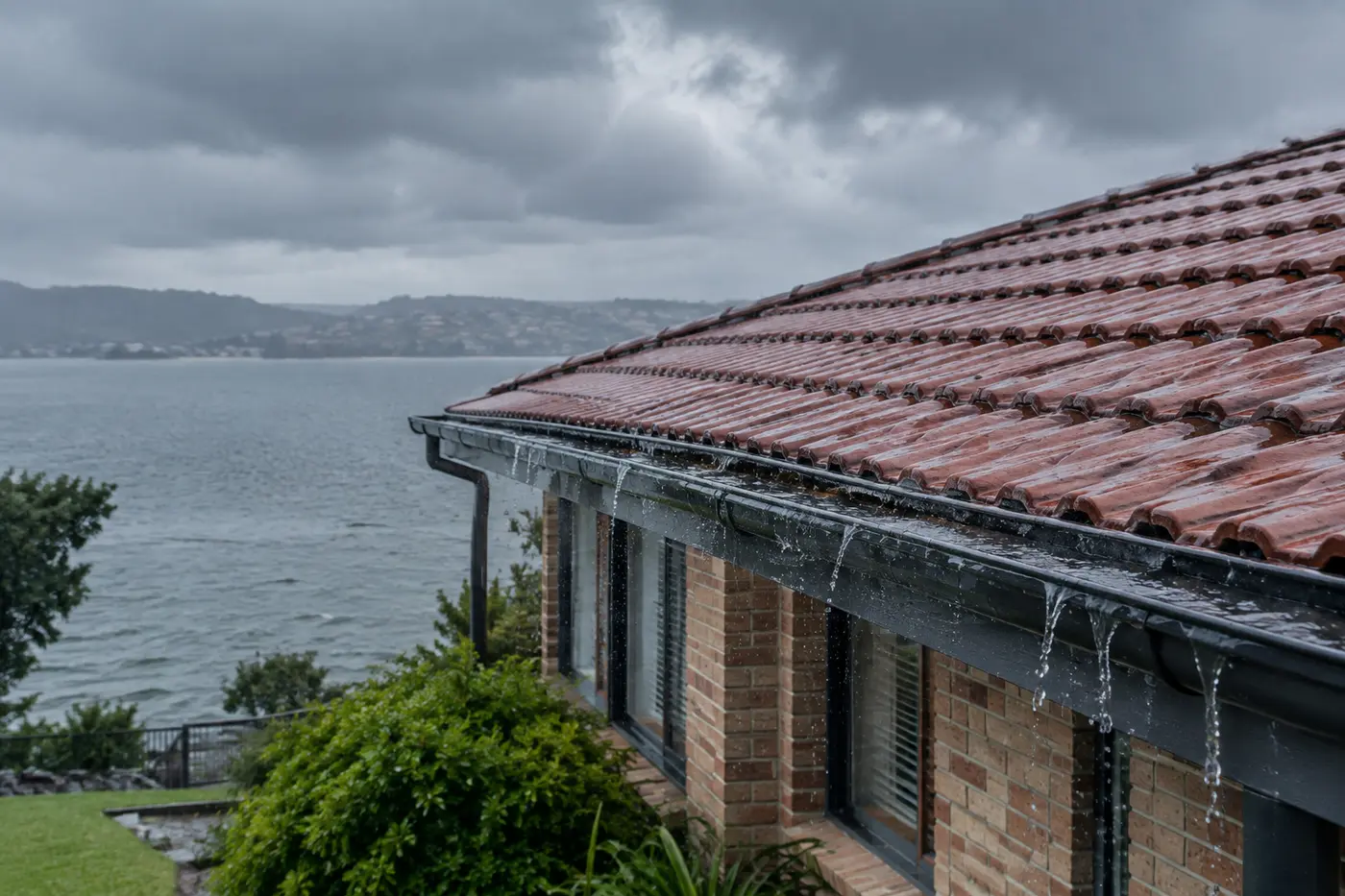
It is usually a southerly that does it. The rain comes in sideways off the lake, and by the next morning there is a brown ring on the hallway ceiling or a drip landing in the laundry. Most of the calls we get about roof leaks in Lake Illawarra, Albion Park Rail and the suburbs around them start just like this, with someone looking up at a stain and wondering who to ring first.
This guide covers what to do in the first few hours, how to tell a roof leak from a plumbing leak, and what actually happens when we come out to look. We are a local tile and metal roofing business led by Ryan Bruce, who has more than 10 years of experience on both, so this is written from what we see on roofs around the lake.
First, work out whether it is the roof at all
Plenty of people search for water leaks when they first see a wet patch, and fair enough. Water is water until you know where it came from. But a roofer cannot fix a burst pipe, and a plumber is not the person for a cracked ridge cap. Getting this right first saves you a wasted call-out.
A few quick checks point you the right way:
- Only appears during or after rain: almost always the roof, flashings or gutters.
- Wet on a dry, sunny day? Far more likely a pipe, hot water system or shower seal.
- Stain under the bathroom or near the kitchen sink on a single storey house: check taps and seals before blaming the tiles above.
- Worse in wind than in plain heavy rain, which is a classic roof sign. Water is being pushed under tiles or flashing.
Still unsure? Turn off every tap and look at the water meter. If it is moving, call a plumber first.
While it is still raining, stay off the roof
Wet tiles and wet metal are slippery, and nothing in your ceiling is worth a fall. Everything useful in the first few hours can be done from inside.
Put a bucket or tub under the drip with a towel in the bottom so the splashing does not spread. If the ceiling is bulging with water, keep people and pets out of the room below and switch off any nearby light fitting at the switchboard. Move furniture, rugs and anything electrical out of the way. Then take photos of the stain, the drip and any damaged belongings. Those photos help us, and they help you if you end up talking to your insurer.
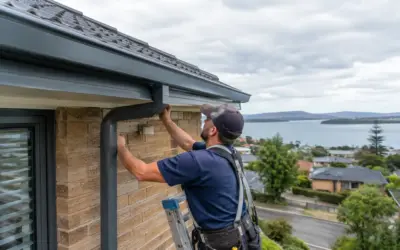
Once the rain stops, look at the gutters from the ground. Gutters full of leaves, or holding water, are one of the most common reasons water ends up inside, especially in rooms along the eaves.
Wind off the lake finds the weak spots
Homes around Lake Illawarra and down through Albion Park Rail cop a fair bit of weather. Open water and flat ground give the wind a clear run at the roof, and wind is what turns a small weakness into a leak. Rain that would run straight off on a still day gets blown up under tiles, past worn mortar and behind loose flashings.
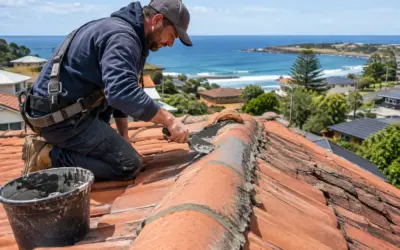
On tile roofs, the trouble spots we see most are ridge capping where the bedding or pointing has cracked, cracked or slipped tiles, and valleys (the channels where two roof slopes meet) that are blocked with leaves or rusted through. On metal roofs it is more often lifted or rusted screws, failed flashing around a skylight or flue, and corrosion where salt air has had years to work on the sheet. Our guide to the usual causes of a leaking roof goes through each of these in more detail.
This one surprises people: the stain is often nowhere near the actual leak. Water lands on a rafter or the top of the ceiling and travels along it before soaking through, so a drip in the middle of the lounge room can start a metre or two upslope.
We trace it from inside, then go up
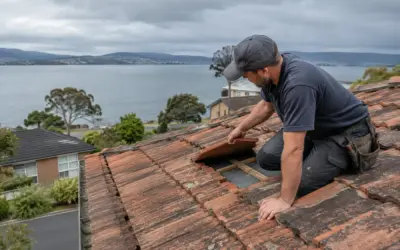
We start where the water is showing, then get on the roof and follow it back. On a tile roof that usually means lifting tiles around the suspect area and checking the ridge, valleys and flashings. On metal we check fixings, laps and every penetration through the sheet. If it is safe and makes sense, we put in a temporary fix to stop more water getting in while the proper repair is organised.
Then we tell you what we found and what your options are. We work on a decision first approach: you get the technical facts about the state of your roof and what each option involves, without a sales pitch attached. Most leaks are a repair, not a new roof. Sometimes a roof is old enough that patching one spot just moves the problem along, and if that is the case we will say so and explain why.
For most homes the fix falls under our tile and metal roof repair service, which covers everything from swapping a few broken tiles to resealing flashings and repointing a ridge.
Neighbouring suburbs, the same weather
We treat Lake Illawarra and Albion Park Rail as neighbours because the weather hitting them is much the same. The roofs vary from street to street, with older tile homes sitting next to metal roofs on newer builds and renovations. Our pages on roofing in Lake Illawarra and roof work around Albion Park Rail cover the local side of things.
Whichever suburb you are in, a small leak left through one more winter rarely stays small. Wet timber, soaked insulation and ceiling sheets that have been wet more than once are what turn a modest repair into a much bigger job.
Common questions about roof leaks around the lake
Who is the best person to fix a leaking roof?
A roofer who works on your type of roof, tile or metal. If the water only appears when it rains, start with a roofer. If it shows up on dry days, a plumber is more likely to be the right call.
How do you stop a leaking roof during heavy rain?
From inside, not from the roof. Catch the water, move belongings away, keep clear of any sagging ceiling and switch off nearby lights at the switchboard. Call a roofer once the weather allows a safe inspection.
Can you claim insurance on a leaking roof?
It depends on your policy and on what caused the leak. Many policies treat sudden storm damage differently from wear that has built up over years. Read your policy wording, take photos early, and ask your roofer to explain clearly what they found and what caused it.
How much does it cost to fix a leaking roof?
That depends entirely on the cause. Replacing a few cracked tiles is a very different job from rebuilding a valley or repointing a full ridge line. We give you a free quote once we have found the source, so you know the cost before any work starts.
Do metal roofs leak differently from tile roofs?
Yes. Metal roofs usually leak at screws, laps between sheets, or flashings around skylights and flues, often where salt air has caused corrosion. Tile roofs more often leak at cracked tiles, ridge capping and valleys.
Is a small roof leak an emergency?
Not always, but it should not wait for months. A slow drip can soak insulation and timber long before the stain looks bad from below. If the ceiling is sagging, or water is near light fittings or power points, treat it as urgent.
If you have a stain on the ceiling or a drip that only turns up when the wind swings south, call us on (02) 4215 8188 or book a look through our roof repairs page. We will find where the water is getting in and tell you straight what it will take to fix.