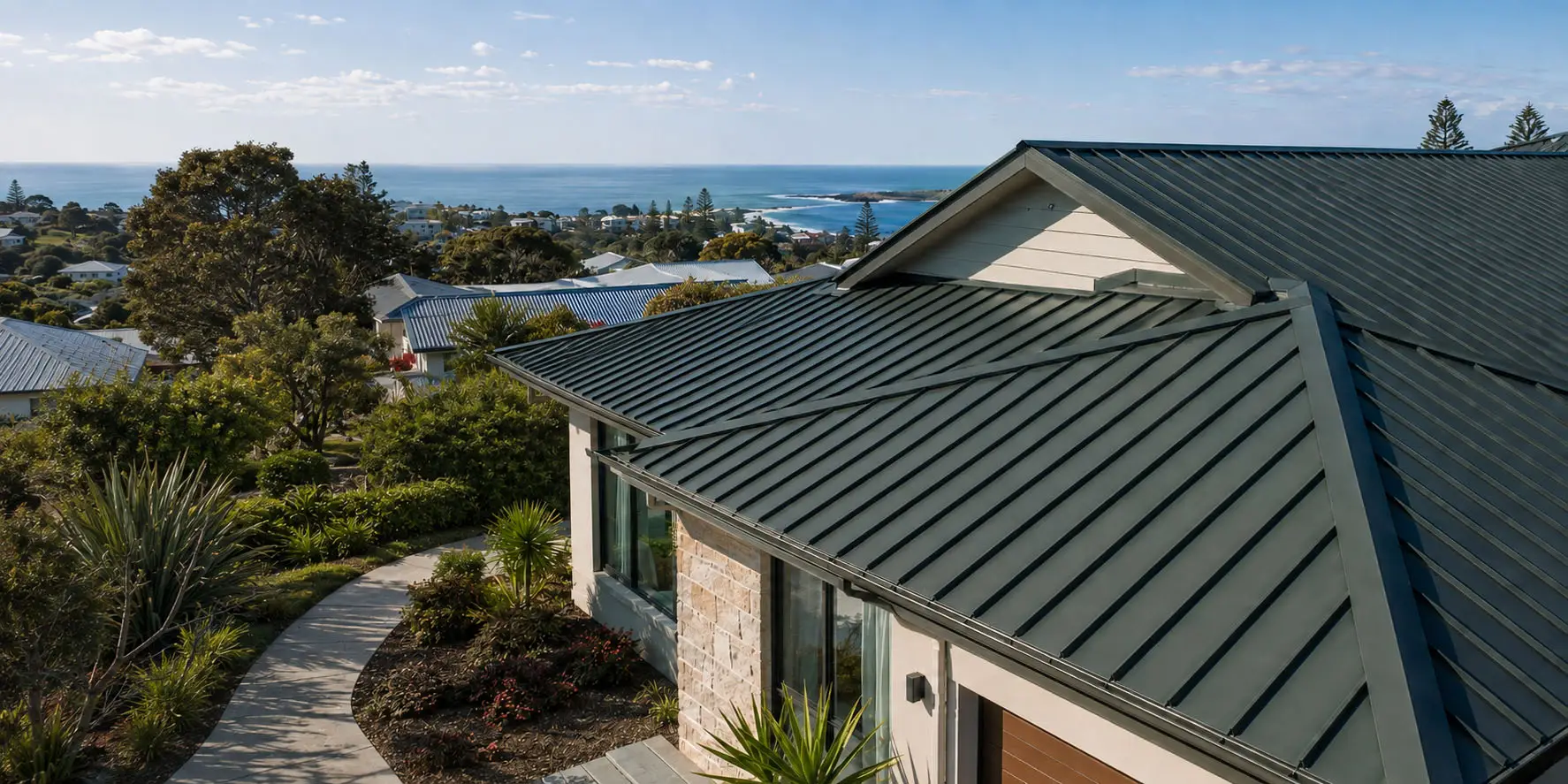
Is Metal Roofing a Good Choice for Shellharbour Homes?
Metal roofing is widely used across Shellharbour for both established homes and newer builds. Its relatively lightweight construction, clean appearance and suitability for a wide range of roof designs make it a practical option for many coastal properties.
Shellharbour’s location also means roofing materials are regularly exposed to salt-laden air, strong winds, rain and continual UV exposure. These conditions make correct material selection, installation and ongoing maintenance particularly important.
A well-designed metal roofing system can provide strong long-term weather protection, but no material is completely maintenance-free. Fixings, flashings, sealants, coatings and roof penetrations all need to work together with the roofing sheets themselves.
Learn more about our metal roofing services in Shellharbour.
What Is Metal Roofing?
Metal roofing is a broad term covering roofing systems manufactured from materials such as coated steel and aluminium.
Instead of individual tiles, metal roofs generally use larger sheets or panels fixed to the roof structure.
A complete metal roofing system can include:
- Roof sheets
- Ridge capping
- Flashings
- Fixings and washers
- Valleys
- Sarking or underlay
- Roof penetrations
- Drainage components
- Sealants where required
The performance of the roof depends on how all of these parts are specified and installed together.
Why Metal Roofing Is Popular in Shellharbour
Metal roofing offers several characteristics that suit many residential properties.
Lightweight Construction
Metal roofing is generally lighter than many tiled roofing systems.
This can be useful for:
- New homes
- Extensions
- Renovations
- Roof replacements
- Some properties where a lighter roofing material is preferred
However, changing roofing materials should never be treated as a simple swap.
The existing structure, roof pitch and design still need to be assessed before a different roofing system is installed.
Clean, Contemporary Appearance
Metal roofs are available in a range of profiles and finishes.
They can complement:
- Contemporary homes
- Coastal properties
- Traditional houses
- Extensions
- Commercial buildings
- Renovated older homes
Colour and profile selection can make a significant difference to the finished appearance.
Efficient Rainwater Run-Off
Long continuous roof sheets can provide efficient water shedding when installed with suitable pitch, flashings and drainage.
This becomes particularly important during periods of heavy rainfall.
Fewer Individual Roofing Pieces
Unlike tiled roofs, metal roofing generally uses large sheets.
This means there are fewer individual roofing units that can crack or move, although metal systems still rely heavily on correctly installed fixings, flashings and penetrations.
Common Metal Roofing Materials
Different metal roofing products have different characteristics.
Pre-Painted Steel Roofing
Pre-painted steel roofing systems are widely used in Australia.
Depending on the selected product, they are available in:
- Different profiles
- Numerous colours
- Various coating systems
- Different suitability classifications
Products such as Colorbond® may be considered where specified for the project.
The exact product should always be confirmed in the quotation rather than assuming that every coloured metal roof uses the same material.
Zinc-Aluminium Coated Steel
Some metal roofing uses zinc-aluminium alloy coatings designed to protect the steel substrate.
These products can be used as finished roofing or as the base for additional coatings, depending on the system.
Suitability still depends on the specific product, environment and manufacturer requirements.
Galvanised Steel
Galvanised steel uses a zinc coating to help protect the underlying material.
It has been used extensively in Australian roofing, particularly on older properties and some commercial structures.
Existing galvanised roofing should be inspected for:
- Surface corrosion
- Coating breakdown
- Fixing deterioration
- Previous repairs
Aluminium Roofing
Aluminium is another possible roofing material.
It is lightweight and naturally resistant to rust, although it is less commonly used than coated steel on many residential projects.
Material selection should be based on the particular building and exposure rather than assuming one metal is universally better.
Metal Roofing and Coastal Exposure
Living near the coast places additional demands on exposed metal components.
Airborne salt can accumulate on roofing surfaces and around:
- Fixings
- Flashings
- Sheet laps
- Roof penetrations
- Valleys
- Gutters
- Other metal components
This does not mean metal roofing is unsuitable for coastal areas.
It does mean that the correct product should be chosen for the property’s exposure and installed according to the relevant manufacturer requirements.
Homes closer to breaking surf or particularly exposed coastal locations may require different product considerations from more sheltered inland properties.
Rust and Corrosion
Corrosion is one of the main issues to monitor on ageing metal roofs.
Possible warning signs include:
- Surface rust
- Rust around screws
- Corrosion along sheet edges
- Coating breakdown
- Rust around flashings
- Small holes
- Previous patches beginning to fail
Minor surface corrosion may sometimes be treatable.
More advanced corrosion can weaken the metal itself.
Once a sheet becomes significantly perforated or structurally compromised, painting over it does not restore the lost strength.
Metal Roof Repairs in Shellharbour
Not every metal roof problem requires replacement.
A targeted repair may be appropriate where the wider roof remains serviceable.
Common repair work may involve:
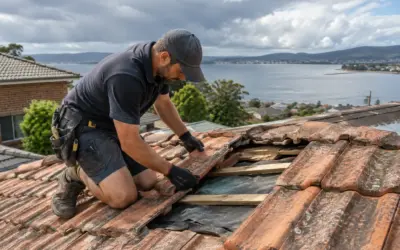
- Replacing deteriorated fixings
- Addressing localised corrosion
- Repairing suitable damaged sheets
- Flashing repairs
- Sealant replacement
- Leak repairs
- Repairs around roof penetrations
Professional metal roof repairs in Shellharbour should focus on the underlying cause rather than simply covering the visible symptom.
Loose or Deteriorated Fixings
Metal roof sheets rely on appropriately installed fixings.
Over time, issues may develop due to:
- Age
- Movement
- Washer deterioration
- Previous installation
- Wind exposure
- Corrosion
A loose fixing can potentially allow water entry or movement around the sheet.
Where fixings are deteriorating across large areas, the wider roof condition should also be assessed.
Flashing Problems on Metal Roofs
Flashings are essential at roof junctions.
They may be installed around:
- Walls
- Roof penetrations
- Valleys
- Ridge lines
- Changes in roof height
- Vents
- Pipes
Poorly installed or deteriorated flashing is a common potential leak source.
A roof may have perfectly serviceable sheets but still leak because one flashing detail has failed.
Roof Penetrations
Anything passing through a metal roof requires careful weatherproofing.
Examples include:
- Plumbing vents
- Exhaust systems
- Solar equipment
- Antennas
- Other roof-mounted services
Problems may develop if:
- Flashings deteriorate
- Sealants fail
- Fixings loosen
- Other trades damage the roofing
- Equipment is installed incorrectly
A leak near a roof penetration should be inspected before assuming the roof sheet itself has failed.
Metal Roof Replacement
There comes a point where repairing individual sections no longer provides good value.
Replacement may deserve consideration where there is:
- Widespread corrosion
- Perforated sheets
- Repeated leaks
- Extensive coating failure
- Numerous previous patches
- Widespread fixing deterioration
- Major storm damage
- A roofing system no longer suitable for restoration
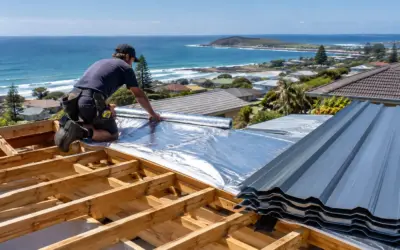
Replacement can involve removing the existing roofing and installing a completely new metal roofing system.
What Happens During Metal Roof Replacement?
Although every project differs, a typical replacement process may involve:
- Inspecting the existing roof
- Measuring and preparing the project scope
- Removing existing roofing materials
- Inspecting visible battens and supporting components
- Addressing unsuitable components where required
- Installing sarking where included
- Installing new metal roof sheets
- Installing new flashings and ridge capping
- Completing roof penetrations and junctions
- Final inspection and site clean-up
Hidden deterioration may only become visible once the existing roofing is removed.
A good quote should explain how unexpected work will be managed if this occurs.
New Metal Roofs
Metal roofing is also commonly used for:
- New homes
- Extensions
- Garages
- Outdoor areas
- Renovations
- Commercial buildings
A new roof should be designed around the building rather than simply choosing a sheet profile based on appearance.
Important factors include:
- Roof pitch
- Structural design
- Drainage
- Wind exposure
- Roof penetrations
- Flashing requirements
- Product suitability
Metal Roofing Profiles
Metal roofing is available in a variety of profiles.
Different profiles may suit different:
- Roof pitches
- Building styles
- Structural designs
- Drainage requirements
- Aesthetic preferences
The profile should be selected according to the building requirements and product specifications rather than appearance alone.
Metal Roofing and Wind Exposure
Shellharbour properties can experience periods of strong wind.
The performance of a metal roof depends heavily on appropriate:
- Fixing type
- Fixing spacing
- Roof design
- Sheet installation
- Edge detailing
- Ridge capping
- Flashings
A new roof should be specified to suit the property and its applicable wind conditions.
It would be misleading to describe a roofing system as simply “storm proof” without considering the building and installation requirements.
Metal Roofing and Heavy Rain
A correctly designed metal roof can shed significant rainfall efficiently.
However, water management depends on more than the roof sheets.
Other components include:
- Gutters
- Downpipes
- Valleys
- Flashings
- Roof pitch
- Sheet overlaps
- Penetrations
A leak during heavy rain can sometimes originate from drainage or flashing rather than failure of the main metal roofing sheets.
Metal Roofing and Condensation
Condensation can occur beneath roofing under certain environmental conditions.
Its management can depend on:
- Sarking
- Insulation
- Ventilation
- Building use
- Ceiling construction
- Internal moisture levels
Condensation problems should be considered as part of the wider roof and building system.
Simply replacing the external roof sheets does not automatically solve every moisture problem.
Metal Roofing and Sarking
Sarking can form an important part of some metal roofing systems.
Depending on the property, it may assist with:
- Secondary weather protection
- Condensation management
- The overall roof system
- Protecting internal areas beneath the roofing
Whether sarking is required should be determined during the project scope.
Is Metal Roofing Noisy During Rain?
Metal roofs are often assumed to be significantly noisier than tiled roofs.
In reality, internal noise depends on the complete roof construction.
Factors include:
- Insulation
- Sarking
- Ceiling materials
- Roof cavity
- Building design
- Rain intensity
A properly designed roof system can make a major difference to how much external sound is transmitted indoors.
Can Metal Roofing Help With Heat?
Roof colour and surface characteristics can influence solar heat absorption.
However, installing a metal roof does not automatically guarantee a cooler home or reduced electricity costs.
Thermal performance depends on:
- Roof colour
- Insulation
- Sarking
- Ventilation
- Ceiling construction
- Building orientation
- Windows
- Shading
- Air-conditioning use
A lighter or more reflective roofing colour may contribute to the overall thermal performance of some buildings, but the entire building envelope matters.
Roof Colour Selection
Colour can influence both appearance and solar absorption.
When choosing a metal roof colour, homeowners may consider:
- Exterior wall colours
- Property style
- Surrounding homes
- Desired architectural appearance
- Solar reflectance
- Product availability
- Planning requirements
Dark roofing may suit some homes aesthetically, while lighter roofing can reflect more solar energy.
The best choice depends on the priorities of the individual property.
Metal Roofing and Solar Panels
Metal roofing is commonly used with solar installations.
Solar equipment introduces additional considerations around:
- Mounting systems
- Roof penetrations
- Fixing points
- Access
- Flashing
- Future roof maintenance
If an ageing roof is likely to require replacement soon, it can make sense to assess the roof before installing a new solar system.
Otherwise, panels may need to be removed and reinstalled later.
Maintaining a Metal Roof
Metal roofing still benefits from sensible ongoing observation.
Homeowners can watch for:
- Visible rust
- Changes around fixings
- Loose sheets
- Flashing deterioration
- Storm damage
- Scratches or coating damage
- New roof leaks
There is no universal rule requiring every metal roof to be professionally inspected on a fixed two- or three-year schedule.
Age, exposure and condition should determine how often closer inspection is worthwhile.
Should You Wash a Metal Roof Every Year?
There is also no universal need to pressure wash every metal roof annually.
Maintenance requirements vary according to:
- Product
- Coastal exposure
- Roof pitch
- Rain washing
- Surrounding vegetation
- Surface contamination
- Manufacturer recommendations
Some sheltered roof areas may accumulate more salt or debris than naturally rain-washed sections.
Product-specific maintenance requirements should always be followed where relevant.
Metal Roofing Costs in Shellharbour
Metal roofing prices vary significantly between projects.
Cost factors can include:
- Roof size
- Sheet profile
- Selected roofing product
- Roof pitch
- Building height
- Access
- Existing roof removal
- Sarking
- Battens
- Flashings
- Valleys
- Roof penetrations
- Safety systems
- Structural work
A simple single-storey new roof will have a very different scope from replacing a complex roof on an established home.
A detailed written quotation provides a much more meaningful figure than a generic per-square-metre estimate.
Metal Roofing vs Tile Roofing
Both systems can perform well in Shellharbour when correctly specified and maintained.
Metal Roofing May Suit Homeowners Wanting:
- A relatively lightweight roofing system
- Long continuous roofing sheets
- A contemporary appearance
- A wide range of colour options
- A system suitable for certain lower roof pitches
Tile Roofing May Suit Homeowners Wanting:
- A traditional appearance
- Individual replaceable roofing units
- To retain the existing character of a tiled property
- A roof structure already designed for tiles
Neither option is universally better.
The existing structure, architectural style, roof pitch, exposure and budget should all be considered.
Choosing a Metal Roofing Contractor
Before proceeding with new metal roofing or replacement work, check that the contractor:
- Holds appropriate NSW licences
- Is suitably insured
- Has experience with metal roofing
- Specifies the roofing product clearly
- Explains preparation requirements
- Addresses flashings and penetrations
- Provides a detailed written scope
- Explains how variations are handled
- Provides applicable warranty information
If a branded roofing product is being quoted, confirm the exact product and specification in writing.
Is Metal Roofing Right for Your Shellharbour Property?
Metal roofing can be an excellent option for new builds, renovations and roof replacement projects throughout Shellharbour.
It can also often be repaired or restored where the existing roofing remains in suitable condition.
The key is matching the roofing system to the building, location and actual condition of the property.
At Roofing Shellharbour, we work across metal roofing, repairs, replacement and related roofing services, with recommendations based on what the project genuinely requires.
If you are considering a new metal roof or have concerns about an existing one, contact our Shellharbour roofing team for a free quote.