It usually starts small. Someone has been up to fix the TV antenna, or a branch came down in the last southerly, and now you can see a tile from the backyard that does not look right. There is a line running across it. Maybe a corner is missing. Nothing is dripping inside yet, so the question is whether that crack is worth a call or can wait.
Cracked roof tile repair is one of the most common small jobs we do on tile roofs around Shellharbour. Most of the time the fix is simple. The trouble is that the crack you can see is rarely the whole story, and the quick fix most people reach for is the one that tends to fail.
A cracked tile is not always leaking, but it is always letting water past
A tile roof works in layers. The tiles overlap and shed most of the rain down into the gutter. On many homes there is sarking underneath (a reflective, waterproof membrane laid over the rafters) that catches whatever gets past the tiles and carries it down to the gutter too. Older homes often have no sarking at all, which means the tiles are the only thing between the rain and your ceiling.
So a cracked tile on a sarked roof might go months without a stain showing inside. The water is still getting through, though. It sits on the sarking, wets the battens (the timber strips the tiles hook onto) and finds its way to any tear or sag in the membrane. On an unsarked roof, the same crack can put water straight onto the ceiling the first time it rains hard from the right direction.
Where the crack sits matters as much as how big it is. A hairline crack near the top edge of a tile, where the tile above covers it, may carry very little water. A crack across the exposed face, low down near the gutter, takes all the water running off every tile above it. That one is far more likely to cause trouble.
Most cracked tiles we find were stepped on
People expect storms to be the main cause. Storms do break tiles, especially when branches fall or hail comes through. But on the roofs we look at, foot traffic is the bigger culprit. Antenna installers, solar crews, gutter cleaners and well meaning family members all walk on tiles, and a tile only takes weight properly at certain points. Step in the middle of the pan and it can crack underneath you without you hearing a thing.
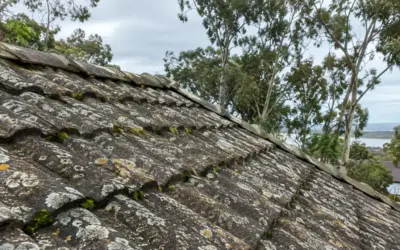
Age plays a part too. Concrete tiles lose their surface coating over the years and become more porous. Old terracotta gets brittle. Neither breaks on its own very often, but an older tile will crack under a load that a newer one would shrug off. Tiles also crack where something has shifted underneath them, like a sagging batten or movement in the frame.
If you have had trades on the roof recently and a crack appeared soon after, that is worth mentioning when you call us. It helps us know where to look for others.
Why a dab of silicone rarely lasts
Sealing a crack with silicone or a roof sealant is the fix most people try first, and it is the one we undo most often. Here is why it tends to fail:
- The sealant sits on a dusty, weathered surface, so it never bonds well.
- Sun and salt air break it down, and it starts to peel.
- The tile still moves as it heats and cools, so the crack keeps working open.
- A thick bead can dam water and push it sideways under the next tile.
There is a place for it. If rain is forecast and a proper repair is a few days away, sealing the crack can buy time. Just treat it as a bandage, not the repair.
The proper fix is a replacement tile, and matching it is the hard part
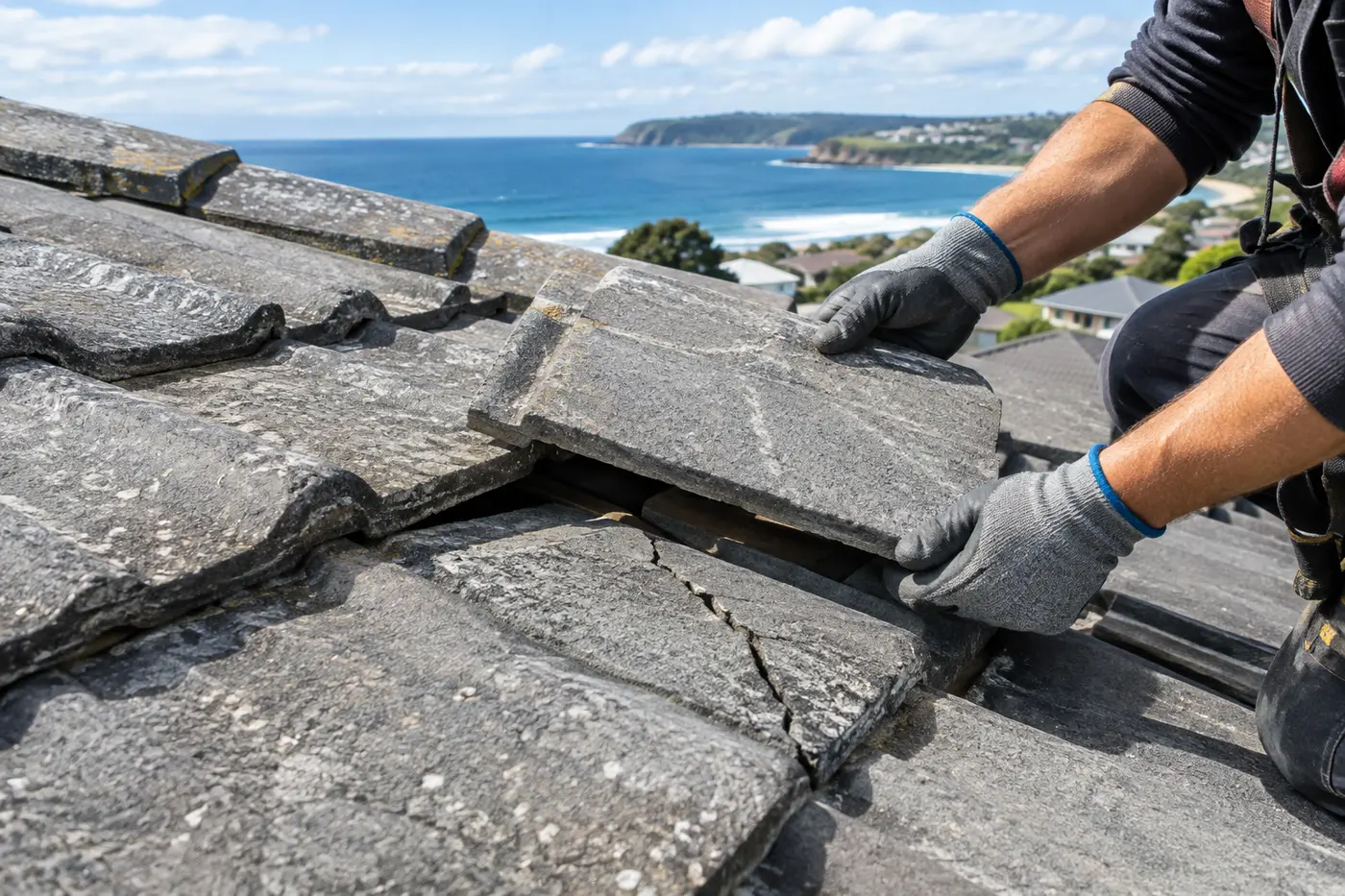
Swapping a single tile is a quick job for a roofer. We lift the tiles that overlap the broken one, slide it out, hook the new tile over the batten so its nibs (the small lugs on the underside) sit in place, then lower the surrounding tiles back down. If the broken tile was clipped or wired down, the new one gets fixed the same way.
The real challenge is finding a tile that matches. Concrete and terracotta profiles change over the decades and some are no longer made. Even when the profile still exists, a new tile can look very different beside ones that have faded in coastal sun for decades. A tile that does not quite fit the profile will not seal properly against its neighbours, so a close enough match is not good enough.
When a new tile will not match, one option is to take a sound tile from a spot nobody sees, like the back of a garage roof, and put the new tile there instead. The front of the house stays consistent and the odd tile ends up out of sight.
If you are not sure which type you have, our guide to telling terracotta and concrete tiles apart explains the differences, including how each one ages.
Our tile roof repair service covers single tile swaps like this, along with the bedding, pointing and flashing work that often turns up once we are on the roof.
Cracked ridge caps are a different problem
The curved tiles running along the peaks and hips are ridge caps, and they are held on differently. Instead of hooking onto battens, they sit on a bed of mortar and are sealed with a flexible pointing compound. When a ridge cap cracks, or the mortar under it starts crumbling into the gutter, the fix is usually rebedding or repointing rather than a simple swap.
Loose ridge caps are more serious than a cracked field tile, because the ridge is where wind gets the most grip. We cover what is involved in our article on when ridge capping needs repointing.
Please do not climb up to check it yourself
We understand the temptation. It is one tile, and a replacement looks easy. But tile roofs are slippery and they are not built to walk on. Every step on the wrong spot risks cracking another tile, and a fall from a single storey roof can cause serious injury.
You can learn a lot from the ground and from inside. A pair of binoculars from the yard will often show cracks, slipped tiles and gaps along the ridge. In the roof space, a torch can show daylight coming through, damp or darkened battens, or water marks on the sarking. Take photos if you can. They help us arrive with the right tiles.
When a few cracks point to a bigger job
One or two cracked tiles on an otherwise sound roof is a repair. It is not a sign the whole roof is failing. What changes the picture is when we find cracks scattered across every face, tiles that break as soon as we lift them, and ridge mortar crumbling at the same time. At that point, swapping tiles one by one becomes a cycle of callbacks, and it is worth talking about restoration or replacement instead.
We work on a decision first approach: we tell you what we found and what your options are, and you decide. A single cracked tile does not need a sales pitch, and you will not get one from us.
Common questions about cracked roof tiles
Are broken roof tiles a problem?
Yes, even if nothing is dripping yet. A broken tile lets water onto the sarking or straight into the roof space, where it can rot battens and stain ceilings over time. The longer it is left, the more likely a small repair becomes a bigger one.
Can you seal a cracked roof tile instead of replacing it?
You can, but only as a short term measure. Sealant struggles to bond to weathered tiles and breaks down in sun and salt air, so it usually lets go within a few seasons. Replacing the tile is the repair that lasts.
What is the best sealant for cracks in concrete roof tiles?
A flexible, UV stable roof sealant applied to a clean, dry surface will hold better than general purpose silicone. Even so, no sealant restores the strength of a cracked tile. Use it to stop water until the tile can be swapped.
How do you replace a single roof tile?
The overlapping tiles are lifted, the broken tile is slid out, and the new tile is hooked over the batten by its nibs before the surrounding tiles are lowered back into place. The job itself is quick. Sourcing a tile with the right profile and colour usually takes longer than fitting it.
How are ridge tiles attached?
Ridge caps sit on a bed of mortar along the peak or hip and are sealed over with flexible pointing. Some are also mechanically fixed. That is why cracked or loose ridge caps usually need rebedding or repointing rather than a straight swap.
If you have spotted a cracked or slipped tile, or water marks in the roof space, get in touch about fixing broken tiles on your roof. We will tell you what we find, whether it is one tile or something more, and what the sensible next step is.