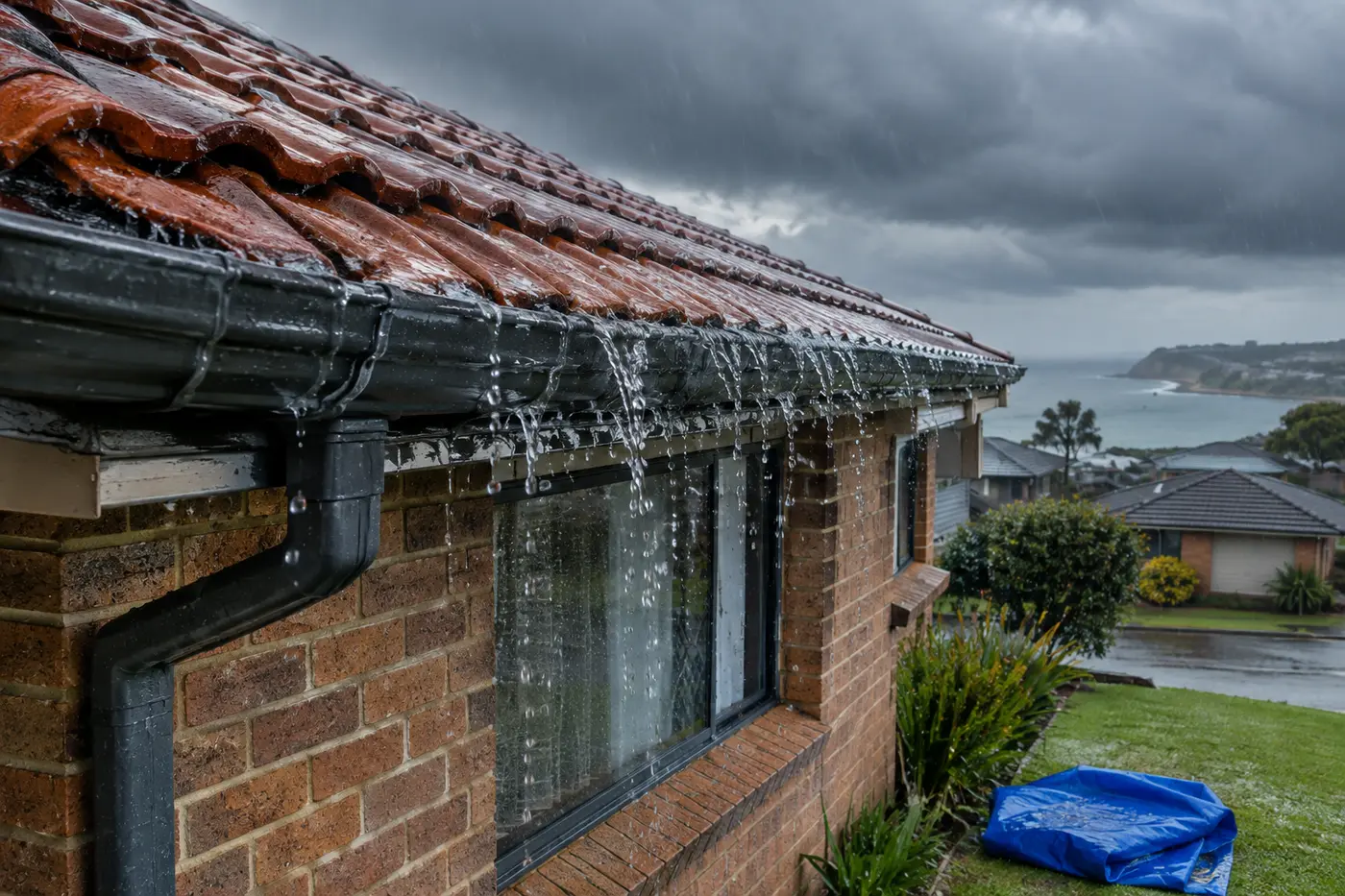
It is nine at night, the wind has swung around to the south, and water is dripping through a downlight onto the hallway carpet. You can’t see the roof in the dark, and you suspect every roofer in the Illawarra is already flat out. If your roof is leaking during a storm, what to do in the next hour matters more than anything a tradesperson can do tonight.
This is the order we would want a neighbour to follow: keep people safe, limit the water damage, record what happened, then get the roof properly watertight once the weather allows. We have been working on tile and metal roofs around Shellharbour for more than 10 years, and the steps below are the same ones we walk people through on the phone when a storm hits.
Nobody should be on the roof until the storm passes
Wet tiles are slippery. Wet metal is worse. Add wind gusts, a ladder leaning on a gutter full of water and poor light, and you have the conditions behind a lot of serious falls.
Leave the tarp in the shed tonight. A leak that runs for a few more hours costs money. A fall from a roof can cost far more, and there is nothing up there that cannot wait for daylight and dry weather.
Water near anything electrical comes first
Water that comes in through the roof follows the easiest path down, and in most homes that means light fittings, downlights, ceiling fans and exhaust fans. If water is coming through or near any of them, switch off that lighting circuit at the switchboard. If you are not sure which circuit it is, turn off the main switch. If the switchboard itself is wet, or you cannot reach it without standing in water, stay away from it and call a licensed electrician or your electricity distributor.
Then look up. A plasterboard ceiling holding water will sag into a bulge, and a large bulge can give way without warning. Keep people and pets out from under it. If the bulge is small and the power is off, some people make a small hole at its lowest point with a screwdriver, over a bucket, so the water drains in one controlled place rather than bringing a whole sheet down. If the ceiling is cracking or the bulge is large, leave the room and close the door.
Catch the water, then move what you can
Buckets, bins and stock pots under every drip. Towels around them to stop splashing. Pull rugs, furniture, electronics and anything made of paper or fabric out of the way, and lift what you can off the floor in the room below the leak.
Resist the urge to climb into the roof space at night. Ceiling joists are narrow, the plaster between them will not take your weight, and there may be wiring you cannot see. If you have safe manhole access and the power to that area is off, a quick look with a torch can tell you whether water is pooling on top of the ceiling. That is useful information for the roofer, but it is not worth a foot through the ceiling.
Photos taken tonight save arguments later
Before you mop everything up, take photos and short videos: water coming in, the stain spreading, the buckets filling, any damaged belongings. Your phone records the date and time automatically, which helps if you need to show when the damage happened.
Once the rain stops and it is light, take more from the ground. Look for tiles that have shifted, sheets that have lifted, flashing that has pulled away, branches on the roof and gutters overflowing. Keep receipts for anything you buy to protect the house. Insurers often look closely at whether damage came from the storm itself or from wear that was already there, and we have covered how home insurance treats roof leaks in a separate guide.
Who to call depends on how bad it is
Not every storm leak is the same kind of emergency, and calling the right people first saves time.
- Anyone hurt or in danger, or a structural collapse: call 000.
- A tree through the roof, large sections of roofing missing, or water you cannot control: the NSW SES on 132 500 can help with temporary protection during storms.
- A steady leak with the roof still intact: contain it as above and call a roofer to book a make-safe as soon as conditions allow.
- Water near the switchboard: an electrician before anyone else.
After a big storm, roofers are triaging calls. Jobs with open roofs and water pouring in go first. Being clear about what you can see (how many drips, which rooms, any visible damage outside) helps get you to the right place in the queue.
An emergency repair is a make-safe, not the fix
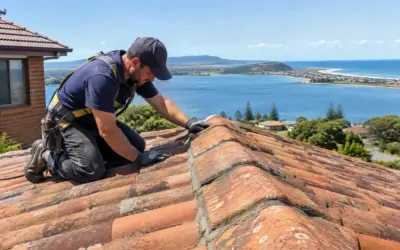
This catches people out. The first visit after a storm is usually about stopping water, not solving the problem. On a tile roof that might mean refitting slipped tiles, swapping in a spare for a cracked one, or securing a tarp over the damaged area. On a metal roof it might be refixing a lifted sheet or flashing, or sealing a damaged section until new material can be ordered.
The permanent repair comes once the roof is dry and safe to work on properly. That second visit matters because water rarely comes in where it drips out. It runs along battens, sarking and ceiling joists before it finds a way down, so the stain in the hallway can sit metres from the actual entry point. Finding that entry point and fixing it properly is the core of our roof leak repairs in Shellharbour.
Why storms find leaks that light rain never does
Plenty of roofs stay dry through months of ordinary rain, then leak in one storm. The reason is usually wind. East coast lows and strong southerly changes along this stretch of coast push rain sideways and even uphill, under tile laps, past cracked ridge pointing and behind flashings that shed vertical rain perfectly well. Heavy downpours also overload valleys and box gutters. If a gutter is blocked or undersized, water backs up and spills inward instead of out.
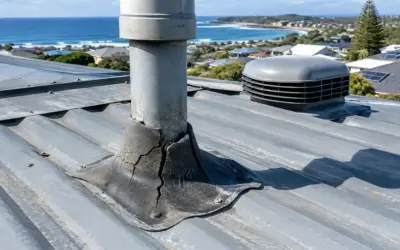
On tile roofs we most often trace storm leaks to slipped or cracked tiles, worn ridge capping and valleys. On metal roofs it tends to be lifted or loose screws, flashings that have worked loose, and corrosion from salt air on homes closer to the water. There is more detail on the usual reasons a roof starts leaking if you want to know what to look for.
Silicone and tape rarely survive the next storm
Hardware stores sell sealants, spray coatings and repair tapes, and it is tempting to grab one the morning after. On a small hole in clean, dry metal, a patch can buy a few weeks. It will not fix a sheet that is lifting, a screw that has worked loose or a flashing that has pulled away.
On tile roofs, sealant often does more harm than good. Tiles are designed to let water run down and out between them. Smearing silicone into the joints can trap water and send it somewhere new, and it hides the original fault from whoever comes to fix it. We regularly spend part of a repair cleaning off old sealant before we can see the real problem.
After the storm, check the parts you cannot see
Once the leak has stopped, the water that already came in is still there. Wet ceiling insulation stays wet for a long time and can sag or start to smell. Plasterboard that took on water may stay stained, soften, or grow mould. Keep an eye on the ceiling for a couple of weeks. A stain that keeps spreading after dry weather means water is still getting in somewhere, or that it was never a roof leak at all.
It also makes sense to have the whole roof looked over before the next front comes through, not just the spot that leaked. A storm that shifted one tile or lifted one sheet has often loosened others nearby.
Common questions about storm leaks
How do you fix a leaking roof in the rain?
Usually you don’t, at least not properly. In active rain and wind the safe options are inside the house: isolate power, catch the water and protect belongings. A roofer may be able to make a temporary repair in a break in the weather, but the permanent fix waits until the roof is dry.
What is the best thing to put on a leaking roof in an emergency?
A heavy tarp, properly secured so the wind cannot get under it, is the standard temporary cover for a damaged section. A loose tarp in a storm can flap, pull tiles off and make things worse, which is why it is a job for daylight, calm weather and someone used to working at height.
Can you put Flex Seal on a metal roof?
Spray and liquid sealants can stick to clean, dry metal and may hold a small pinhole for a while. They do not fix lifted screws, loose flashings or corroded sheets, which is where most metal roof leaks start. Expect any sealant to be removed when the proper repair is done.
How serious is a leaky roof?
More serious than a few drips suggest. Water that gets into the ceiling space soaks insulation, stains and weakens plasterboard, and can reach wiring and light fittings. A small leak left through several storms often costs more to fix than the same leak caught early.
Is it expensive to fix a roof leak after a storm?
It depends on what caused it and how easy it is to reach. Refitting a few slipped tiles is a very different job from replacing a corroded valley or a run of damaged sheets. A roofer should be able to tell you which it is after looking at the roof rather than guessing from the ceiling stain.
What is the best permanent solution for a leaking roof?
Fixing the actual entry point with the right material: replacing cracked tiles, repointing ridge capping, replacing a worn valley or flashing, or refixing and replacing screws on a metal roof. A full restoration or replacement only makes sense when the roof is failing in many places at once.
If your roof leaked in the last storm, or you are watching a ceiling stain and wondering whether it will hold through the next one, we can find where the water is getting in and tell you plainly what it needs. Get in touch to book a roof repair visit and we will take it from there.