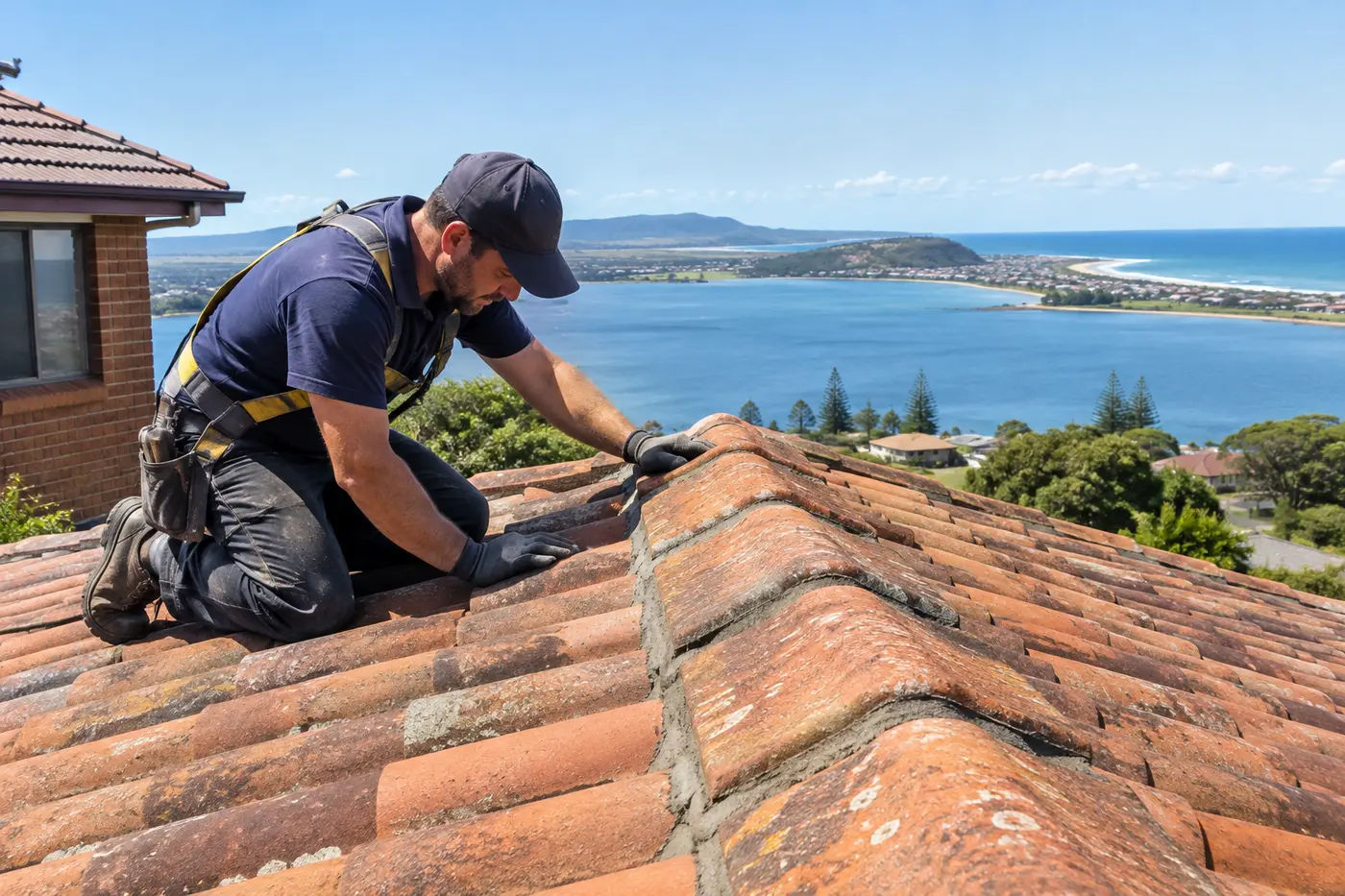
A big southerly storm rolls through, the gutters roar for an hour, and nothing drips inside. Most people take that as a pass. Then a few months later a brown ring turns up on the hallway ceiling, and the damage behind it has been building the whole time. That gap between “it seems fine” and “it’s leaking” is what a roof inspection is for. So what does a roof inspection include, and when is it actually worth booking one? Here’s how we approach it on homes around Shellharbour.
A proper inspection looks in three places, not one
The roof surface is the obvious part. But water rarely comes out where it goes in. It can run along a batten or down a rafter and show up two rooms away. So a real inspection covers the roof itself, the roof space underneath, and the ceilings inside the house.
If someone stands on a ladder at the gutter line, glances across the tiles and gives you a verdict, that’s a look. It isn’t an inspection.
On top of the roof
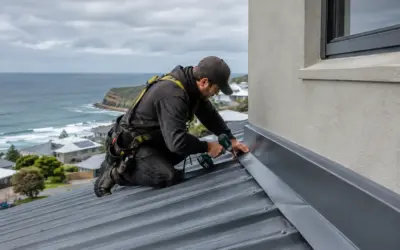
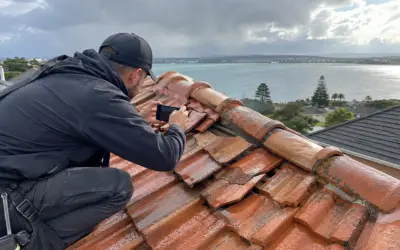
We walk the roof where it’s safe to do so and go straight to the parts that fail first. They differ a little between tile and metal.
On a tile roof we’re checking:
- Cracked, slipped or broken tiles, especially along the paths where antenna, solar or air conditioning installers have walked
- Ridge capping (the row of curved tiles along the peaks) and the mortar bedding and pointing that holds it in place
- Valleys, the metal channels where two roof faces meet, for rust, splits and packed leaves
- Flashings around chimneys, skylights, vent pipes and walls
On a metal roof the list changes:
- Roofing screws: loose ones, rusted heads, perished rubber washers
- Rust at sheet laps, cut edges and around penetrations
- Stains where copper pipes or old lead flashings drain onto Zincalume or Colorbond, which corrodes the steel
- Box gutters and the sheet ends that feed into them
On both, we check the gutters and downpipes. A blocked downpipe can back water up under the roof edge, and from inside that looks exactly like a roof leak.
In the roof space
With a torch, the underside tells you a lot. We look for water marks on timbers, stains on the sarking (the foil or membrane layer under the tiles or sheets), damp or flattened insulation, and daylight showing through where it shouldn’t. On metal roofs, rust spots on the underside of the sheets usually point to condensation rather than a leak.
This is where old leaks turn up. Plenty of them soak into timber and dry out again without ever reaching the ceiling, until the one storm where they do.
Inside the house
Last, the ceilings. Brown rings, bubbling paint near the cornice, mould in the corners of upstairs rooms. A stain isn’t always the roof, though. Showers, hot water systems and air conditioners leak too, and our guide on telling a roof leak from a plumbing leak walks through how to tell the difference.
Coastal roofs fail in their own particular ways
Salt is the big one. Near the water, salt spray settles across the whole roof. Rain rinses the exposed surfaces clean, but sheltered spots never get washed: under overhangs, the backs of gutters, the upper side of sheet laps. That’s where we find corrosion starting on metal roofs, often well before anything is visible from the street.
The other one is wind. A strong southerly or easterly can drive rain sideways and even uphill, pushing it under tile laps and flashings that cope fine with ordinary rain. That’s why some roofs here leak only in certain storms and stay dry the rest of the year. An inspection can’t recreate the storm, but it can find the gaps that wind-driven rain will use.
Six times an inspection is worth the call
You don’t need someone on your roof every month. These are the moments we’d actually suggest it.
Before storm season. Spring is the ideal time. Clearing out valleys and gutters and fixing loose ridge capping before the summer storms costs far less than fixing ceilings afterwards. If yours hasn’t been looked at yet this year, now is still a good time.
After a big storm. Even if nothing is dripping. Lifted tiles and loose flashings often hold through one storm and fail in the next.
When you’re buying a house. A standard building inspection doesn’t always include getting up on the roof. Read the report for wording like “roof not accessed” or “viewed from ground level”, and if you see it, get a roofer to check before you settle.
Before solar goes on. Panels sit in place for years. If the tiles or sheets underneath need work later, the panels have to come off first.
After other trades have been up there. Antenna, solar and air conditioning installers aren’t roofers, and tiles crack underfoot more easily than people expect.
Before you commit to a restoration or a new roof. An honest inspection tells you whether the roof is worth restoring or whether the money is better spent on replacement. You want that answer before anyone quotes you on paint.
What you can safely check from the ground
Please don’t climb up yourself. Wet tiles and metal are slippery, and older tiles crack when they’re walked on the wrong way, which can create the very leak you were looking for.
From the yard, ideally with binoculars, look for tiles that sit out of line with their neighbours, gaps or missing mortar along the ridges, rust streaks running down metal sheets, and plants growing in the gutters. Watch the gutters during heavy rain. If water pours over the front edge, something is blocked.
Inside, put your head up through the manhole with a torch the day after heavy rain. Damp timber or wet insulation means it’s time to call someone.
You should walk away knowing what’s urgent and what can wait
An inspection is only useful if you understand what it found. We take a decision-first approach: we tell you what we found, what needs doing now, what can wait a season or two, and what’s simply worth keeping an eye on. Then you decide. Nobody should be pushing you to book work on the spot.
Whoever does your inspection, ask for photos of anything they flag. And be wary of a report where everything is urgent and the only answer is a full replacement. Sometimes that’s the right call. Often a targeted fix does the job, like repointing tired ridge capping or replacing a run of broken tiles.
If you’d like us to take a look, here’s how a roof inspection from our team works. Roofing Shellharbour is led by Ryan Bruce, who has more than 10 years of experience on tile and metal roofs, and we look after both homes and commercial properties.
Common questions about roof inspections
How often should a roof be inspected?
For most homes, a regular check plus one after any major storm is enough. Homes close to the beach, older tile roofs and metal roofs still on their original screws are worth checking more often, because salt and age speed up the wear. If nobody has looked at the roof since you moved in, start there.
Does a building and pest inspection check the roof?
It covers the roof to a point, but the inspector doesn’t always get up on it. Many reports note that the roof was viewed from a ladder or from the ground. If yours says that, a roofer’s inspection fills the gap before you settle.
Can I inspect my own roof?
You can do a lot from the ground and from the roof space with a torch. Walking on the roof is a different matter: it’s a fall risk, and tiles crack easily under someone who doesn’t know where to step. Leave the roof surface to a roofer.
What’s the best time of year to get a roof inspected?
Spring, before the summer storms. That leaves time to clear valleys and gutters and fix loose tiles or ridge capping while the weather is kind. Straight after a big storm is the other good time, even if nothing seems to be leaking.
Do roofers check inside the roof space?
A good one will, if there’s safe access. The roof space shows old water marks, damp insulation and gaps in the sarking that you can’t see from outside. If an inspection skips the roof space, ask why.
What happens if the inspection finds a problem?
You should get a clear explanation of what was found, how urgent it is and what your options are, ideally with photos. Small things like a couple of cracked tiles or a few loose screws are often simple fixes. Bigger issues get quoted so you can decide in your own time.