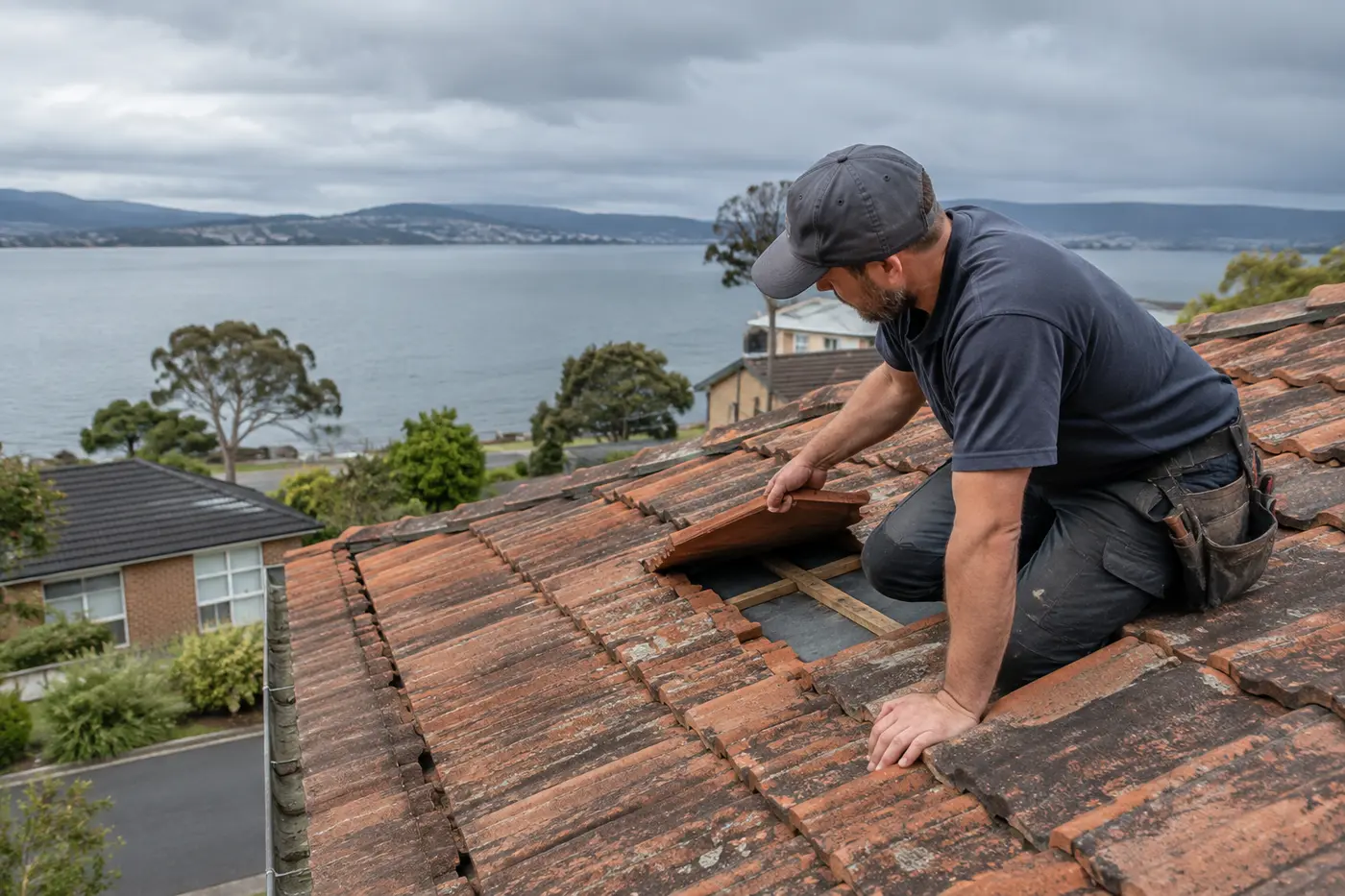
The call usually goes something like this. It rained hard overnight, there is a brown ring on the hallway ceiling, and the homeowner has already been up a ladder looking for a broken tile directly above it. They did not find one. That is normal, and it is the reason roof leak detection in Shellharbour is its own job, not just a quick look from the gutter.
Water rarely comes through the roof where it shows up inside. It lands on the roof, finds a gap, then runs along a batten, a fold in the sarking or the top of a ceiling joist until it reaches a low point to drip from. We have traced a stain in a back bedroom to a cracked ridge cap well across the roof. Finding the real entry point is most of the work. The repair itself is often the quick part.
Where the stain is tells you less than you think
A ceiling stain is the end of the trail, not the start. On a tiled roof, water that gets past a tile will often sit on the sarking (the foil or membrane layer under the tiles) and travel downhill before it escapes at a tear or a lap. On a metal roof, it can creep sideways along a sheet rib or under flashing for a surprising distance.
So the first thing we do is stop guessing from the stain alone. We note where it is, how big it is and whether it only appears in certain weather. A leak that only shows up in a southerly is a very different problem to one that appears in any steady rain. If you have noticed a pattern, tell us. It saves time on the roof.
How we actually track a leak down
Every roof is a bit different, but the process we follow on most homes around Shellharbour has four stages.
1. Inside first, if there is roof space
If the ceiling has a manhole, we go into the roof space with a torch. Water leaves marks: tide lines on timber, damp or stained insulation, rust on nails and fixings, a darker patch on the underside of the sarking. We follow those marks uphill. On older homes without sarking, you can sometimes see daylight through a gap, which makes things easy. Plenty of homes have no roof access at all, and then the outside inspection does more of the work.
2. Outside, starting with the likely areas
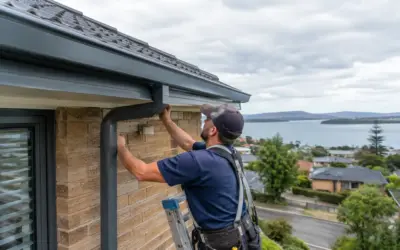
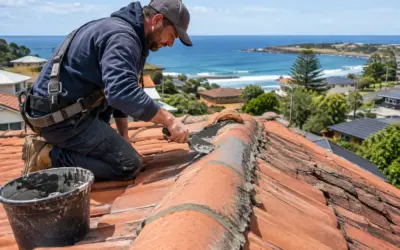
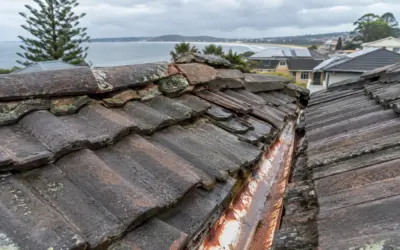
Up on the roof, we check the usual suspects above and uphill of the stain. On tile roofs that means cracked or slipped tiles, perished pointing on the ridge caps, and valleys (the metal channels where two roof slopes meet) that are rusted or clogged with leaves. On metal roofs we look at loose or rusted screws, lifted sheet ends, and flashings around skylights, vents and chimneys. We also check the gutters, because an overflowing gutter can push water back under the roof edge and into the eaves. That one catches a lot of people out.
3. Water testing when it is still not obvious
When there is no clear culprit, we test. One person runs a hose over a small section of roof, starting low and moving up, while someone watches inside for the drip. It is slow and a bit old fashioned, but it works because it copies what rain does. Isolating one area at a time is the only honest way to prove where water is getting in, rather than replacing half a roof on a hunch.
4. Show you what we found, then fix the cause
Once we know the entry point, we explain it plainly, show you photos and give you the options. Sometimes it is one tile and a bit of repointing. Sometimes the leak is a symptom of a valley or a run of flashing that has reached the end of its life, and patching it would only buy a season. We would rather you know that up front.
If you want a sense of the common causes before anyone climbs up, our guide on why roofs start leaking in Shellharbour goes through them one by one.
Roof leak or plumbing leak? Sort it out early
Not every wet ceiling is a roof problem. We get calls about water stains under bathrooms and kitchens, and the honest answer is that some of them are plumbing. A few quick checks help you work out who to call first.
If the stain grows or drips only during or just after rain, the roof is the likely source. If it appears on dry days, or gets worse after showers or when the dishwasher runs, a pipe, a shower recess or failed waterproofing is more likely, and a plumber is the right first call. A stain under a bathroom on a single storey home can go either way, because the roof vents and pipe flashings for that bathroom sit right above it. In those cases we are happy to check the roof side and tell you if it is sound, so you are not paying two trades to guess.
Why homes around the lake leak in certain storms
A lot of our leak calls come from around Lake Illawarra, Albion Park Rail and the older streets of Warilla and Barrack Heights. The pattern we see there is less about one type of roof and more about exposure. Homes with open outlooks across the lake cop wind driven rain side on, which pushes water up under tiles and flashings that would stay dry in a straight downpour. That is why a roof can go years without trouble, then leak in one particular storm.
Salt air adds to it. Fixings, valleys and flashings on older roofs corrode faster near the water, and the mortar on ridge caps breaks down. If you live near the water, our page on roofing around Lake Illawarra covers the area in more detail.
What to do while you wait
You do not need to get on the roof. Please do not, especially when it is wet. Inside, move furniture and anything electrical away from the drip, put down a bucket or towels, and take dated photos of the stain. If the ceiling is sagging or bulging with water, keep people out of that room and switch off power to the light fittings in that area at the switchboard. A sagging ceiling can let go without warning.
Photos matter more than people expect. They help us match the leak to the weather, and they are useful if you later speak to your insurer.
Finding it is half the job. Fixing it properly is the other half
Roofing Shellharbour is led by Ryan Bruce, with more than 10 years of experience on tile and metal roofs. Most leaks we trace end up as a targeted repair, not a new roof. Once we find the source, we fix it through our roof repair service and show you what was done. If you have a stain that keeps coming back, call us on (02) 4215 8188 and we will come and find where the water is really getting in.
Common questions about finding a roof leak
How do I find the source of a leak in my ceiling?
Start by noting when it drips: only in rain points to the roof, while dry weather points to plumbing. If you have safe roof space access, look for water marks on timber and insulation uphill of the stain. The entry point is usually higher up the roof than the stain, so the outside inspection needs to cover more than the spot directly above.
How do you find a roof leak with no roof space access?
Without a manhole, the work shifts outside. We inspect the roof above and uphill of the stain, then water test section by section while someone watches inside. It takes a little longer, but it still pins down the entry point without cutting holes in the ceiling.
What does roof leak detection cost?
It depends on the size and pitch of the roof, access, and how well hidden the leak is. A leak with an obvious cracked tile is quick to confirm, while an intermittent leak that needs water testing takes longer. We look at the roof first and then give you a clear price for the repair, so you know what you are paying for before any work starts.
How long can a roof leak go unnoticed?
Longer than most people think. Small leaks can soak into insulation and timber for months before a stain shows on the ceiling. Early signs include a musty smell in one room, paint peeling near the cornice, or insulation that feels damp when someone is up in the roof space.
Is a leak that only appears in heavy rain still worth fixing?
Yes. A leak that only shows in heavy or wind driven rain is still letting water into the roof structure every time it happens. These are often flashing, valley or ridge cap problems that get worse with each storm, and they cost less to fix early.
Should I call a roofer or a plumber for a water stain?
If the stain only appears during or after rain, call a roofer. If it appears on dry days, or after showers or appliance use, call a plumber first. If you cannot tell, a roofer can check the roof side and rule it in or out.