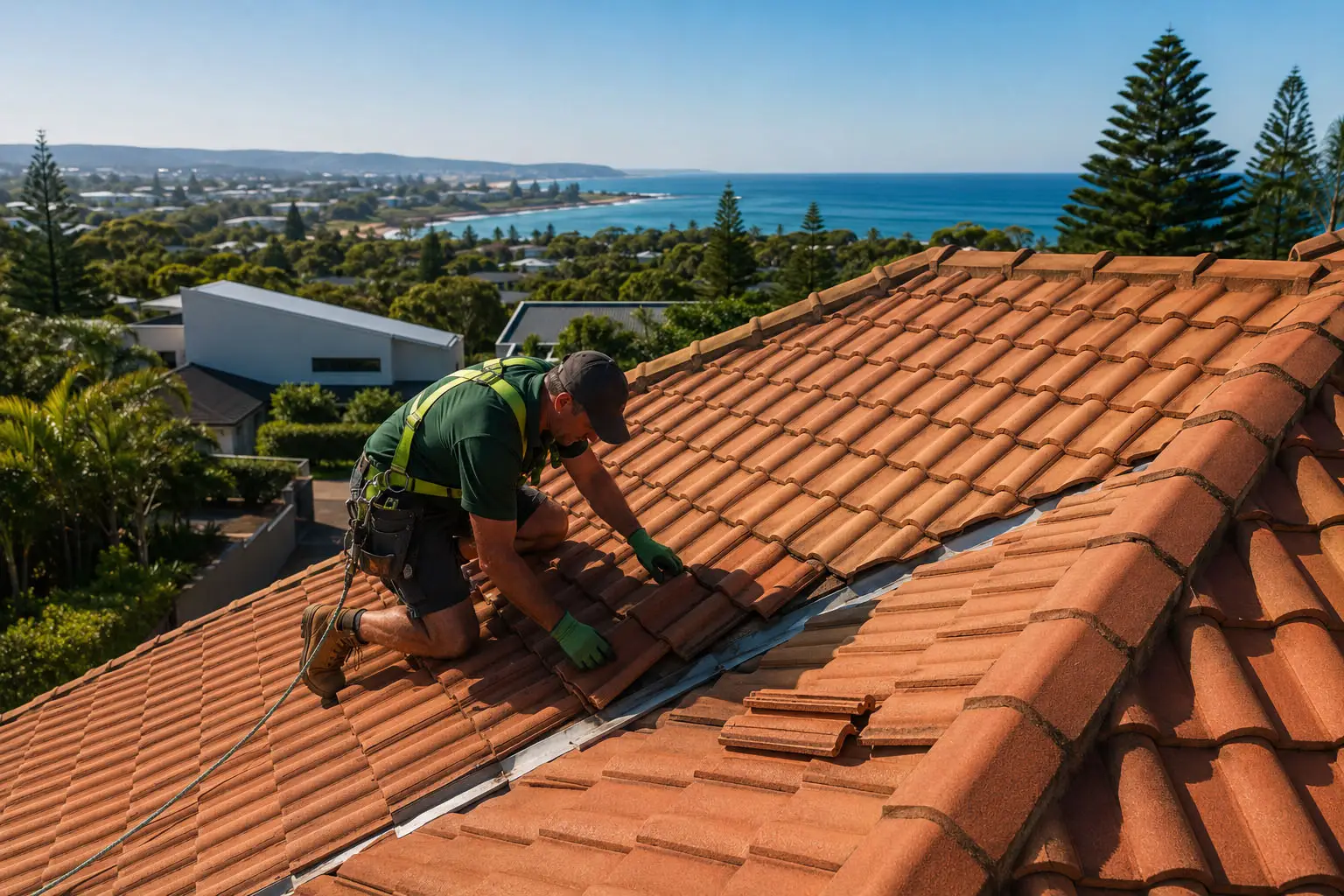
When Should You Arrange Roof Repairs in Shellharbour?
Shellharbour’s coastal conditions can gradually expose weaknesses in both tile and metal roofing. Salt-laden air, rain, wind, UV exposure and general ageing can affect roof sheets, tiles, flashings, fixings, ridge capping and other weather-exposed components.
Some problems are obvious, such as a visible leak or cracked tile. Others develop more gradually and may first appear as ceiling stains, rust spots or deterioration around flashing.
The key is to identify what is causing the problem and how widespread it is before deciding on the repair.
A small isolated defect may only require targeted work. Broader deterioration may point towards restoration, while more severe material failure may eventually make replacement the more practical option.
Learn more about our roof repair services in Shellharbour.
Common Roof Problems in Shellharbour
Different roofing materials fail in different ways, but several issues are commonly associated with ageing and weather exposure.
These can include:
- Cracked or slipped roof tiles
- Rust and corrosion on metal roofing
- Failed or deteriorated flashing
- Loose roofing sheets
- Worn or deteriorated fixings
- Failed sealants
- Damaged ridge capping
- Leaking roof penetrations
- Valley deterioration
- Storm-related damage
- Surface coating failure
- Localised water entry
The visible symptom is not always the actual source of the problem.
Water can travel along tiles, roof sheets, battens or framing before appearing inside the home, which means the point of entry may be some distance from the ceiling stain.
Signs Your Roof May Need Repair
Roof problems are often easier and less disruptive to address when they are identified early.
Warning signs may include:
- Water stains on ceilings
- Damp patches after rain
- Cracked or displaced tiles
- Rust on metal roofing
- Loose roofing materials
- Deteriorated flashing
- Cracked ridge pointing
- Drips around eaves
- Water entry around vents or penetrations
- Peeling or deteriorated roof coatings
- Visible storm damage
- Unexplained moisture inside the roof space
A single symptom does not automatically mean the roof needs major work.
The purpose of an inspection is to determine whether the defect is isolated or part of broader deterioration.
Roof Leaks Can Be Difficult to Trace
One of the biggest challenges with roof repairs is that water does not always travel straight down.
Leaks may originate around:
- Flashings
- Roof penetrations
- Tile laps
- Sheet joins
- Fixings
- Ridge capping
- Valleys
- Previous repairs
- Failed sealants
Water can then move along internal roof components before becoming visible.
This is why simply applying sealant near the stain inside the home often fails to solve the problem.
The repair should address the actual entry point and the reason it failed, not just the visible symptom.
Tile Roof Repairs in Shellharbour
Tiled roofs can develop several types of localised damage over time.
Common issues include:
- Cracked tiles
- Broken tiles
- Slipped or displaced tiles
- Deteriorated ridge pointing
- Loose ridge capping
- Flashing problems
- Valley deterioration
- Water entry around penetrations
A targeted tile roof repair may involve replacing damaged tiles, addressing ridge capping, repairing flashing or correcting another localised problem.
The condition of the surrounding roof should also be assessed.
If damage is widespread across the tiled roof, a broader restoration may be more appropriate than continually replacing individual components.
Metal Roof Repairs in Shellharbour
Metal roofing is also common across the Shellharbour area.
Typical repair issues can include:
- Rust
- Corrosion
- Loose fixings
- Deteriorated washers
- Failed sealant
- Damaged sheets
- Loose roofing sections
- Flashing problems
- Leaks around penetrations
Coastal exposure can make corrosion particularly important to monitor.
Small areas of surface rust may sometimes be treatable, while deeper corrosion or perforated sheets may require replacement.
Painting directly over badly corroded metal does not restore the strength of the underlying sheet.
Flashing Repairs
Flashing plays an important role in weatherproofing vulnerable roof junctions.
It may be installed around:
- Walls
- Chimneys
- Roof penetrations
- Vents
- Roof level changes
- Other junctions
Flashing can deteriorate due to:
- Corrosion
- Movement
- Ageing sealants
- Poor previous repairs
- Loose fixings
- Weather exposure
If flashing fails, water can enter even when the surrounding tiles or roof sheets remain in good condition.
Repairing the visible roof surface without addressing failed flashing may leave the original leak unresolved.
Roof Valleys
Roof valleys carry significant amounts of water during rain.
Problems can develop where:
- Metal valleys corrode
- Debris accumulates
- Adjacent tiles move
- Flashing deteriorates
- Previous repair work fails
Water entry around a valley can become difficult to diagnose because moisture may travel away from the original point of entry.
Where the valley itself has deteriorated, replacement may be required rather than continued patching.
Ridge Capping and Repointing
Ridge capping is particularly relevant on tiled roofs.
Over time, mortar and pointing can crack or deteriorate due to weather exposure and roof movement.
Signs may include:
- Cracked pointing
- Loose ridge tiles
- Crumbling mortar
- Gaps around ridge lines
- Movement around roof junctions
Repointing can help improve weather protection and secure ridge capping where the underlying components remain suitable.
Storm Damage
Strong winds and heavy rain can create sudden roofing problems.
Storm-related damage may include:
- Loose roof sheets
- Broken tiles
- Displaced tiles
- Damaged flashing
- Impact damage
- Loose fixings
- Water entry
- Damaged ridge capping
Not all storm damage is immediately obvious from ground level.
If you notice new leaks or visible changes after severe weather, professional assessment can help determine whether the problem is localised or more extensive.
What to Do If Your Roof Starts Leaking
If water begins entering the home, safety comes first.
Avoid climbing onto a wet or damaged roof.
Inside the property, you can:
- Move furniture away from the leak
- Use containers to collect dripping water
- Keep people away from sagging ceilings
- Avoid water-affected electrical fittings
- Photograph visible damage where safe
- Arrange a roofing inspection when conditions allow
Temporary measures may sometimes be required before permanent repairs can be completed safely.
Why DIY Roof Repairs Can Be Risky
Roofing work involves more than simply replacing a tile or applying sealant.
DIY repairs can involve risks such as:
- Falling from height
- Slippery roof surfaces
- Fragile roofing materials
- Incorrect use of sealant
- Breaking surrounding tiles
- Damaging coatings
- Missing the actual source of the leak
Even a small repair can create a larger issue if the surrounding roofing is disturbed.
For homeowners, inspecting from ground level and arranging professional assessment is generally the safer approach.
Why Sealant Is Not Always the Answer
Sealant has an important role in roofing, but it is not a universal repair solution.
Repeatedly adding sealant can:
- Hide the original problem
- Trap moisture
- Make later repairs more difficult
- Fail because the surface was not prepared correctly
- Crack as roofing materials move
The cause of the defect should be identified first.
Sealant should then be used only where it is appropriate for the roofing detail involved.
When Is a Small Repair Enough?
A targeted repair may be suitable where:
- The problem is isolated
- Surrounding materials remain sound
- Corrosion is limited
- The leak source can be identified
- There is no widespread failure
- Previous repairs have generally performed well
Examples may include:
- One damaged flashing area
- A small number of cracked tiles
- Localised metal corrosion
- Loose fixings
- Ridge capping repairs
- Repairs around a roof penetration
There is no benefit in turning a repairable problem into a larger roofing project unnecessarily.
When Does Repair Become Restoration?
Restoration may become more appropriate when deterioration affects several parts of the roof.
For example, a roof may have:
- Faded coatings
- Surface corrosion
- Multiple small repairs
- Organic growth
- Deteriorated ridge capping
- General weathering
A restoration can combine cleaning, repairs, preparation and protective coatings into a broader scope.
Homeowners can read more about roof restoration in Shellharbour.
When Is Roof Replacement More Appropriate?
Continually repairing an ageing roof is not always economical.
Replacement may deserve consideration where there is:
- Widespread corrosion
- Perforated metal roofing
- Extensive material deterioration
- Multiple recurring leaks
- Significant structural problems
- Large areas of damaged roofing
- Numerous previous patch repairs
- A roof no longer suitable for restoration
The decision should come from the condition of the roof rather than age alone.
Roof Repair Costs in Shellharbour
There is no single standard price for roof repairs.
Costs depend on factors such as:
- Type of repair
- Roof material
- Roof height
- Roof pitch
- Access
- Extent of damage
- Flashing requirements
- Valley work
- Corrosion
- Safety equipment
- Materials required
- Time needed to investigate the problem
A minor accessible repair can be very different from a complex leak involving several roof sections.
An inspection and written quotation are therefore more useful than relying on generic online pricing.
Why Early Repairs Can Make Sense
Addressing a roofing problem early can sometimes prevent water from affecting additional parts of the building.
Leaks may potentially affect:
- Ceiling linings
- Insulation
- Timber
- Internal finishes
- Electrical areas
- Moisture-sensitive materials
This does not mean every small defect will turn into major damage.
It simply means there is usually little advantage in ignoring clear signs of water entry or deterioration.
Insurance and Storm Damage
Some homeowners may consider insurance after severe weather damage.
Coverage depends on the individual policy and circumstances.
Insurers may distinguish between sudden storm damage and deterioration caused by age or maintenance issues.
Where insurance may be relevant:
- Photograph damage where safe
- Keep copies of reports and quotes
- Retain invoices
- Follow the insurer’s claim process
- Avoid making assumptions about what will be covered
Roofing contractors should not promise that particular work will be accepted by an insurer.
Repairs Before Roof Painting
If a roof is going to be painted or restored, required repairs should be completed first.
Painting does not fix:
- Active leaks
- Failed flashing
- Loose tiles
- Advanced corrosion
- Damaged roofing sheets
- Failed ridge capping
A suitable roof should generally be inspected, cleaned, repaired and prepared before coating begins.
Choosing a Roof Repair Contractor
Before proceeding with repairs, check that the contractor:
- Holds appropriate NSW licences
- Carries suitable insurance
- Explains the likely cause
- Provides a written quote
- Identifies the work included
- Clearly explains exclusions
- Uses materials suited to the roof
- Explains how additional damage will be handled
- Provides relevant warranty information
A contractor should be able to explain why the repair is needed, not simply provide a price.
Protecting Your Shellharbour Roof
Roof repairs work best when they address the cause rather than the symptom.
An isolated leak may only require a small repair. Broader deterioration may justify restoration. Extensive roofing failure may eventually make replacement more practical.
At Roofing Shellharbour, we assess the roof condition and recommend work based on what the property actually needs.
If you have noticed leaks, cracked tiles, corrosion, flashing problems or storm damage, contact our Shellharbour roofing team for a free quote.