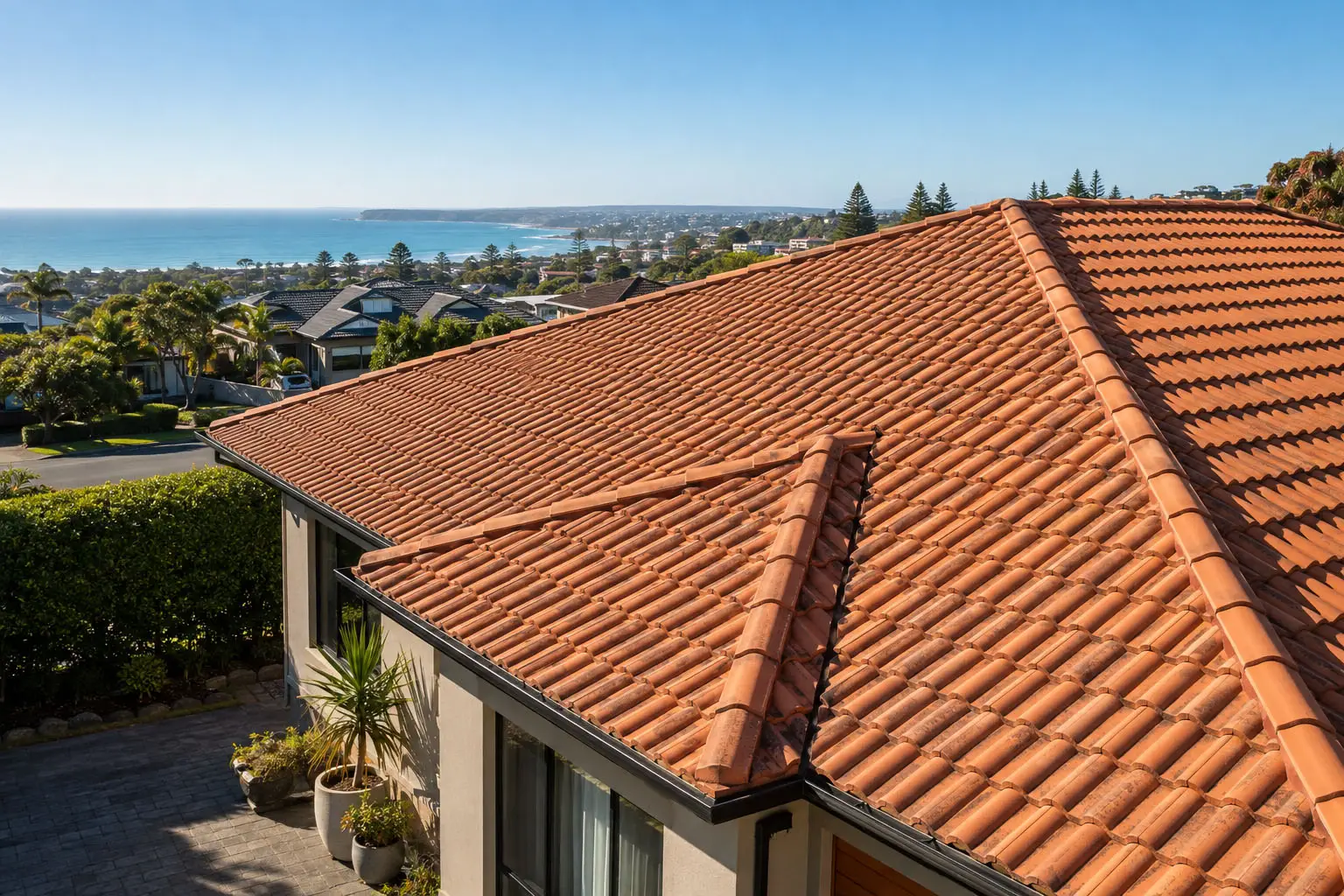
Is Tile Roofing a Good Choice for Shellharbour Homes?
Tile roofing has been used on Australian homes for generations, and it remains a popular choice across Shellharbour for both traditional and contemporary properties.
Concrete and terracotta roof tiles can provide a distinctive appearance and long-term weather protection when the roofing system is correctly installed and maintained. However, the roof needs to be considered as more than just the visible tiles.
Ridge capping, pointing, valleys, flashings, sarking, fixings and the supporting roof structure all contribute to how effectively a tiled roof performs.
Shellharbour’s coastal environment also deserves consideration. Salt-laden air, rain, wind, vegetation and UV exposure can gradually affect different parts of the roofing system, making appropriate inspection and maintenance important over time.
Learn more about our tile roofing services in Shellharbour.
Types of Tile Roofing
The two main tile materials found on residential properties are concrete and terracotta.
Each has different characteristics and appearance.
Concrete Roof Tiles
Concrete tiles are manufactured from a mixture of cement, sand and other materials.
They are available in a wide range of:
- Profiles
- Colours
- Surface finishes
- Styles
Concrete tiles are commonly found across established Australian suburbs and can suit everything from older brick homes to newer residential designs.
Over time, their surface finish may fade or weather.
Depending on the condition of the tiles, suitable concrete roofs may sometimes be cleaned, repaired, repointed and recoated rather than completely replaced.
Terracotta Roof Tiles
Terracotta tiles are made from fired clay and are particularly recognisable for their natural red, orange and earthy tones.
They are frequently seen on older and established homes throughout coastal NSW.
Characteristics can include:
- Distinctive natural colour
- Traditional appearance
- A wide range of profiles
- Suitability for many architectural styles
Terracotta surfaces need to be assessed carefully before cleaning or restoration because their age, finish and condition can affect which treatments are appropriate.
Why Homeowners Choose Tile Roofing
There is no single roofing material that is best for every property, but tile roofing offers several practical and aesthetic advantages.
Traditional Appearance
Tiles can provide a strong architectural feature.
They work particularly well with:
- Brick homes
- Traditional Australian houses
- Mediterranean-inspired properties
- Renovated older homes
- Contemporary designs using traditional materials
There are also many different tile profiles, allowing the roofing style to contribute significantly to the overall appearance of the home.
Individual Components Can Often Be Repaired
One advantage of tiled roofing is that localised damage does not always mean replacing an entire roof.
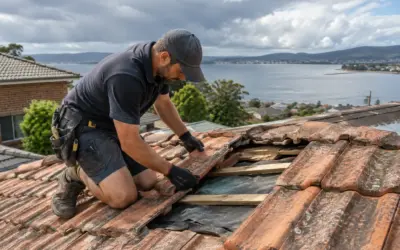
Where surrounding materials remain serviceable, damaged individual tiles may sometimes be replaced without disturbing large sections of roofing.
Long-Term Roofing Material
A properly installed and maintained tile roof can remain serviceable for many years.
However, there is no reliable fixed lifespan that applies to every tiled roof.
Performance depends on factors including:
- Tile material
- Installation quality
- Roof design
- Exposure
- Maintenance
- Previous repairs
- Ridge capping condition
- Underlying roofing components
The condition of the actual roof is therefore more useful than its age alone.
How Shellharbour’s Coastal Conditions Affect Tile Roofs
Tiles themselves are only one part of the system.
Coastal conditions can affect several roofing components in different ways.
Wind
Strong winds can expose weaknesses in:
- Damaged tiles
- Loose tiles
- Ridge capping
- Flashings
- Roof edges
- Existing repairs
After severe weather, new leaks or visible changes may justify closer inspection.
Heavy Rain
Tiled roofs are designed to shed water, but leaks can develop where another part of the roofing system fails.
Common areas requiring attention include:
- Valleys
- Flashings
- Ridge capping
- Roof penetrations
- Cracked tiles
- Junctions between roof sections
Water can also travel beneath roofing materials before becoming visible inside the home, making the entry point difficult to identify.
Salt-Laden Coastal Air
Airborne salt is particularly relevant to metal roofing components used within tiled roof systems.
These can include:
- Valleys
- Flashings
- Fixings
- Roof penetrations
- Other exposed metal components
Corrosion in these areas may eventually contribute to leaks even when the tiles themselves remain serviceable.
Vegetation and Organic Growth
Homes surrounded by trees or receiving significant shade may experience more:
- Moss
- Lichen
- Algae
- Leaf build-up
- Surface staining
Organic growth does not automatically mean the tiles are damaged, but heavily contaminated roofs may benefit from professional assessment and cleaning.
Common Tile Roof Problems
A tiled roof can develop a range of issues as it ages.
Some of the more common include:
- Cracked tiles
- Broken tiles
- Slipped or displaced tiles
- Deteriorated pointing
- Loose ridge capping
- Damaged valleys
- Failed flashing
- Roof leaks
- Moss and lichen
- Surface weathering
- Previous poor-quality repairs
The best repair depends on the actual cause.
For example, replacing one cracked tile will not solve a leak caused by failed flashing several metres away.
Cracked and Broken Roof Tiles
Tiles may crack due to:
- Age
- Impact
- Falling branches
- Severe weather
- Incorrect foot traffic
- Previous roofing work
A cracked tile can potentially allow moisture into the roofing system, particularly during wind-driven rain.
However, not every visible crack has the same significance.
A roofer should inspect the surrounding area and determine whether the problem is genuinely isolated.
Professional tile roof repairs in Shellharbour may include replacement of damaged tiles and assessment of associated roofing components.
Why Roof Tiles Can Move
Roof tiles can sometimes slip or move from their intended position.
Possible contributing factors include:
- Previous installation
- Broken components
- Roof movement
- Severe weather
- Work by other trades
- Deteriorated fixing systems
Moved tiles can create gaps that allow wind-driven rain beneath the roof surface.
They should be correctly repositioned or replaced rather than simply sealed into place without understanding why they moved.
Ridge Capping and Pointing
Ridge capping covers the peaks and junctions of a tiled roof.
Traditionally, ridge tiles are bedded and pointed into position.
Over time, the pointing can develop:
- Cracks
- Gaps
- Separation
- Crumbling
- General deterioration
Roof movement, weather exposure and age can all contribute.
Depending on the condition, ridge capping may require:
- Localised repairs
- Repointing
- Rebedding
- More extensive ridge work
There is no universal rule that says every roof needs repointing after a fixed number of years.
The existing condition should determine when the work is required.
Roof Valleys on Tiled Roofs
Valleys occur where two sections of the roof meet and channel rainwater towards the gutters.
Because they carry concentrated water flow, valleys need to remain in good condition.
Potential issues include:
- Corrosion
- Damage
- Debris accumulation
- Movement of surrounding tiles
- Poor previous repairs
- Water tracking beneath adjacent roofing
Where the valley has deteriorated significantly, replacement may be more appropriate than repeated patching.
Flashing Around Tile Roofs
Flashing is another important part of a tiled roofing system.
It can be installed around:
- Walls
- Chimneys
- Roof penetrations
- Roof junctions
- Changes in roof level
A leak near a wall or penetration may have more to do with flashing than with the surrounding tiles.
This is why roofing inspections should consider the whole system rather than simply looking for broken tiles.
Roof Cleaning for Tile Roofs
Moss, lichen, algae and accumulated grime can leave tiled roofs looking heavily weathered.
Cleaning can:
- Improve appearance
- Remove surface contamination
- Expose defects that were previously difficult to see
- Prepare suitable roofs for painting or restoration
The cleaning method needs to suit the tile material and condition.
Excessive pressure can potentially damage some weathered surfaces, coatings, pointing and other roofing components.
A professional roof cleaner should adjust the process rather than simply applying maximum pressure to every roof.
Can Tile Roofs Be Painted?
Some tiled roofs can be cleaned, prepared and painted where the underlying surface remains suitable.
This is most commonly considered as part of a broader restoration.
Preparation may include:
- Roof inspection
- Cleaning
- Tile repairs
- Ridge capping work
- Surface preparation
- Suitable primer
- Roof coating
Painting should not be used to conceal active leaks or major deterioration.
The substrate still needs to provide a suitable base for the coating system.
Tile Roof Restoration
An older tiled roof does not necessarily need replacement simply because the colour has faded or the surface looks weathered.
Where the roof remains suitable, restoration may address several issues together.
A restoration could involve:
- Professional cleaning
- Replacing damaged tiles
- Leak repairs
- Valley assessment
- Flashing repairs
- Ridge capping work
- Repointing
- Surface preparation
- Priming
- Roof painting
The purpose is to improve both condition and appearance while retaining serviceable roofing materials.
When Tile Roof Repairs Are Enough
A targeted repair is often appropriate where:
- Only a few tiles are damaged
- The leak is localised
- Ridge deterioration affects a small section
- Flashing damage is isolated
- The wider roofing system remains sound
Replacing an entire roof because of one repairable problem would normally be unnecessary.
A professional inspection should distinguish between local damage and broader deterioration.
When Tile Roof Replacement May Be Better
There eventually comes a point where repeatedly repairing an ageing roofing system may no longer represent good value.
Replacement may deserve consideration where there is:
- Widespread tile deterioration
- Extensive breakage
- Significant underlying problems
- Numerous recurring leaks
- Major structural concerns
- Extensive previous repairs
- Roofing materials no longer practical to maintain
Replacement can also form part of a substantial renovation or redesign.
The decision should be based on the condition and requirements of the property rather than simply the age of the tiles.
Installing a New Tile Roof
New tile roofing requires careful planning because the roofing system needs to suit the structure beneath it.
A typical installation can involve:
- Assessing the roof structure
- Confirming the selected tile system
- Installing appropriate sarking or underlay
- Installing battens
- Laying and securing tiles
- Completing valley and flashing details
- Installing ridge capping
- Completing a final inspection
Tile roofing places different loads on a structure compared with some lighter roofing systems.
This becomes especially important if a homeowner is considering changing from metal roofing to tiles.
Tile Roof Replacement and Sarking
Removing an existing tiled roof can create an opportunity to inspect components underneath.
Depending on the project, this may include:
- Sarking
- Battens
- Timber components
- Existing water damage
- Previous repairs
Where required, unsuitable components can be addressed before the new tiles are installed.
What sits underneath the roof can be just as important as the visible finish.
Tile Roofing and Solar Panels
Solar systems need particular consideration on tiled roofs.
Installation involves mounting equipment through or around the roofing system.
Problems can occur where:
- Tiles are damaged during installation
- Flashing is unsuitable
- Roof penetrations are poorly sealed
- Future roof repairs require panel removal
If you are planning both roofing and solar work, coordinating the projects can reduce the need for trades to repeatedly access the same roof.
Tile Roofing and Skylights
Skylights and roof windows create additional penetrations through a tiled roof.
Successful installation depends heavily on the flashing system around them.
Over time, homeowners should pay attention to:
- Water staining
- Flashing deterioration
- Movement around adjacent tiles
- Sealant failure
A leak near a skylight does not necessarily mean the skylight itself needs replacing.
The surrounding roofing details should also be inspected.
Is Tile Roofing Energy Efficient?
The thermal performance of a tiled roof depends on much more than the external roofing material.
Factors include:
- Insulation
- Sarking
- Ventilation
- Roof colour
- Ceiling construction
- Building orientation
- Windows
- Shading
Tiles can form part of an effective roofing system, but it would be misleading to promise specific temperature or energy savings based on tiles alone.
The overall roof and building envelope matter more.
Are Tile Roofs Noisy in Rain?
Roofing acoustics depend on the entire roof construction.
Factors influencing internal noise can include:
- Roofing material
- Insulation
- Sarking
- Ceiling construction
- Roof cavity
- Rain intensity
Tile roofing is often perceived differently from lightweight metal roofing during rain, but homeowners should avoid relying on broad claims about sound performance without considering the complete building system.
How Much Does Tile Roofing Cost in Shellharbour?
There is no useful single price that applies to every tile roofing project.
Costs can vary according to:
- Roof area
- Roof pitch
- Building height
- Access
- Tile selection
- Roof complexity
- Existing roofing removal
- Sarking
- Battens
- Valleys
- Flashings
- Ridge capping
- Structural work
- Safety requirements
A straightforward new roof and a complicated replacement on an older multi-level home can have very different costs.
A detailed quotation provides a better guide than generic square-metre pricing.
Terracotta vs Concrete Roof Tiles
Both materials can be suitable, depending on the property and selected roofing system.
Terracotta
Homeowners may choose terracotta for:
- Natural clay colours
- Traditional appearance
- Distinctive profiles
- Suitability for certain architectural styles
Concrete
Concrete tiles may appeal because of:
- Broad colour choice
- Range of profiles
- Availability
- Compatibility with many Australian home styles
The best option should take into account appearance, structure, budget and product suitability rather than assuming one material is automatically superior.
Tile Roofing vs Metal Roofing
Both tile and metal roofing are widely used in Shellharbour.
Neither is automatically the right choice for every home.
Tile Roofing May Appeal Where:
- A traditional appearance is preferred
- The existing structure is designed for tiles
- Individual component replacement is desirable
- The homeowner wants to maintain the property’s existing character
Metal Roofing May Appeal Where:
- A lightweight roofing system is preferred
- The design suits long continuous roofing sheets
- A contemporary appearance is wanted
- A particular roof profile or pitch suits metal roofing
If changing from one roofing material to another, the supporting structure and overall roof design should be assessed first.
Maintaining a Tile Roof in Shellharbour
Homeowners can help maintain tiled roofing by:
- Watching for cracked or moved tiles
- Checking for ceiling stains after heavy rain
- Managing nearby trees
- Avoiding unnecessary roof access
- Monitoring ridge capping
- Watching for organic growth
- Arranging inspection when visible problems appear
- Checking the roof after significant weather events
There is no need to replace components simply because a generic maintenance interval has passed.
Condition-based maintenance is more useful.
Choosing a Tile Roofing Contractor
Before proceeding with tile roofing work, check that the contractor:
- Holds appropriate NSW licences
- Is suitably insured
- Has experience with tiled roofing
- Provides a written quotation
- Clearly identifies the proposed materials
- Explains preparation requirements
- Addresses flashing and ridge details
- Explains how unexpected damage will be handled
- Provides applicable warranty information
For repair work, they should also explain whether the issue is genuinely isolated or part of wider deterioration.
Is Tile Roofing Right for Your Shellharbour Property?
Tile roofing remains a versatile option for homes throughout Shellharbour.
It can suit new construction, replacement projects and established homes where owners want to retain a traditional tiled appearance.
Existing tile roofs can also often be repaired or restored where the roofing system remains serviceable.
The important part is understanding what the roof actually needs.
At Roofing Shellharbour, we work with tile roofing across repairs, restoration, replacement and new roofing projects, with recommendations based on the condition and requirements of the property.
If you are considering a new tiled roof or need advice about an existing one, contact our Shellharbour roofing team for a free quote.