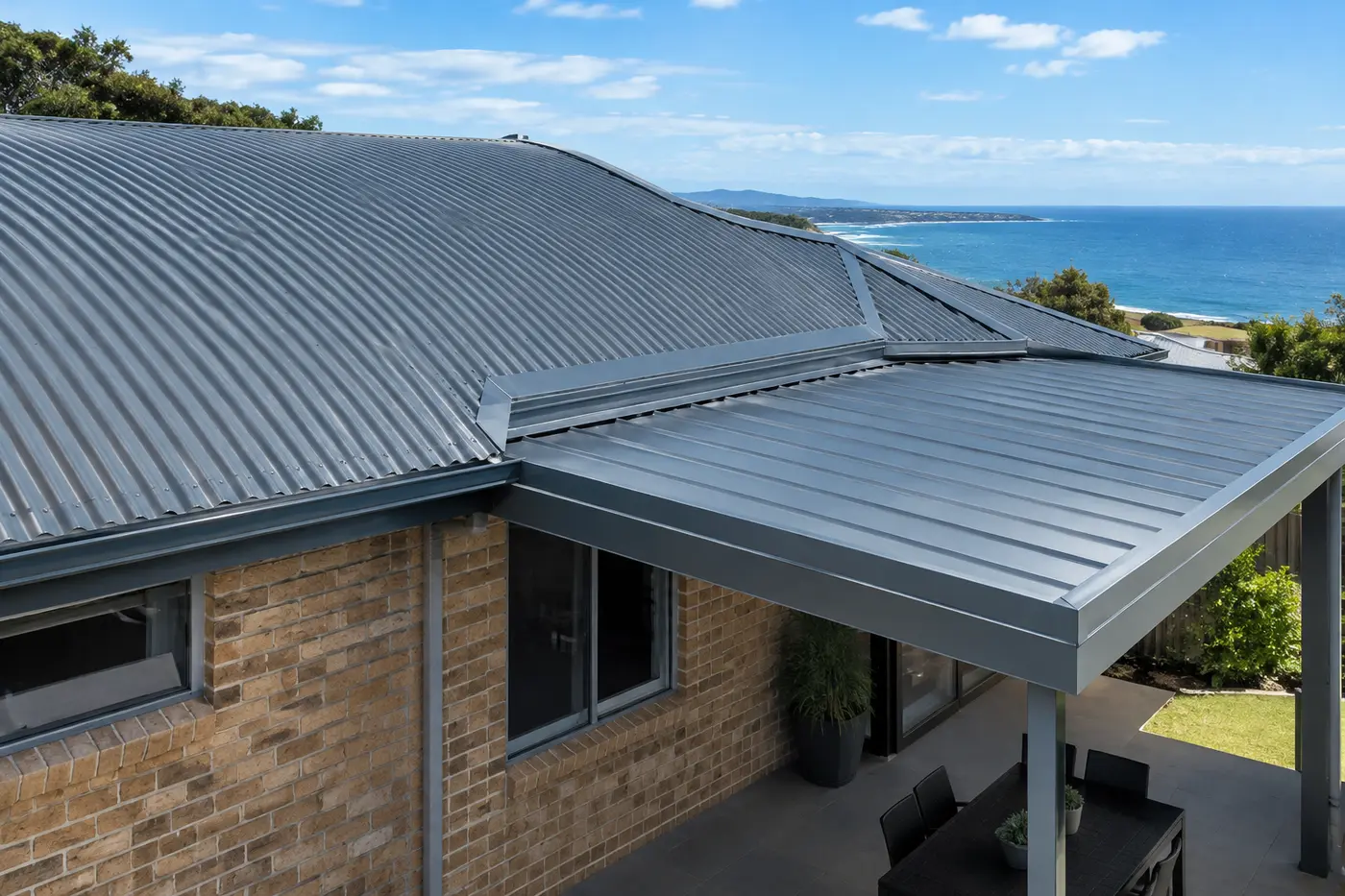
You have finally decided to replace the old roof, the quote lands, and halfway down the page there is a word you have never seen: Trimdek. Or Klip-Lok. Or Custom Orb. Most homeowners assume they are choosing a colour and a steel. The roof sheet profile, the shape the steel is rolled into, matters just as much, and corrugated vs Trimdek vs Klip-Lok is a choice that comes up on almost every metal roof job we quote around Shellharbour.
Here is how the three main profiles differ, where each one makes sense, and the questions worth asking before you sign.
The profile is the shape, not the steel
A roof sheet starts life as a flat coil of steel. It is then rolled into ribs so it can span between the roof battens (or purlins on a steel frame) without sagging. That ribbed shape is the profile.
The steel itself is a separate decision. Corrugated, Trimdek and Klip-Lok can all be ordered in Colorbond or in bare Zincalume. If you are still weighing up that side of things, our guide to choosing between Zincalume and Colorbond on the coast covers it. This post is only about the shape.
Custom Orb, Trimdek and Klip-Lok are Lysaght product names. Other manufacturers roll very similar shapes under their own names, so your quote might use a different brand. The principles below still apply.
Corrugated: the classic wave, and still a good roof
Corrugated is the rounded, rolling wave everyone pictures when they think of a tin roof. It has been on Australian houses for well over a century, and it still suits plenty of homes in Shellharbour, Albion Park and Oak Flats, particularly older weatherboard and fibro cottages where a squarer profile would look out of place.
It is screwed straight through the sheet into the battens below. That is called pierce fixing. Each screw has a sealing washer to keep water out, and on a roof the screws go through the tops of the waves (the crests), where water does not sit.
Corrugated works well on:
- pitched roofs with a decent fall, where water runs off quickly
- heritage and character homes where the look matters
- curved roofs and awnings, since the shallow wave bends more easily
The trade off is that the wave is shallow. Its channels hold less water than the deeper ribbed profiles, so it needs more slope to clear heavy rain. On a low pitch roof, a big Illawarra downpour can push water back up under the laps where sheets overlap. That is when we steer people towards something else.
Trimdek: squarer ribs that move more water
Trimdek has wide, flat pans between tall, squared ribs. It gives a cleaner and more modern line, which is why you see it on a lot of newer homes around Shell Cove and Flinders, and on sheds and extensions just about everywhere.
Like corrugated, it is pierce fixed, with the screws going through the ribs. The deeper rib does two useful things. It carries more water away, so it copes with lower pitches than corrugated. It is also stiffer, so it can usually span further between supports.
For a lot of the re-roofs we do, Trimdek is the sensible middle ground. It handles a flatter roof than corrugated, it costs less than a concealed fix system, and it looks right on most brick veneer homes.
Klip-Lok: no screws through the top of the sheet
Klip-Lok is a concealed fix profile. Instead of screws going through the sheet, steel clips are fixed to the roof frame first. The sheets then press down over those clips and lock in place. From above you see clean ribs and no screw heads at all.
That is a genuine advantage on the coast. On a pierce fixed roof, every screw is a small hole, and its rubber washer ages in the sun. We trace plenty of leaks on older metal roofs back to tired or loose screws, and on homes close to the water the screw heads are often the first thing to show salt corrosion. A concealed fix roof takes most of those holes out of the picture.
Klip-Lok also suits very low pitch roofs, including skillion and near flat designs. It handles long single sheet runs well, because the clips let the steel expand and contract as it heats up and cools down through the day.
The catch is cost and fussiness. It is generally dearer than the pierce fixed profiles, the clips have to be set out accurately, and it does not curve the way corrugated does. It is harder to patch later, too. Swapping out one damaged Klip-Lok sheet is a bigger job than replacing a corrugated one.
The roof decides, not the brochure
There is no single best profile. When we look at a home for a metal roof replacement, these are the things that steer the choice.
Roof pitch. This is the big one. Every profile has a minimum pitch set by the manufacturer, and going below it risks leaks and can void the product warranty. Steep roof, all three are on the table. Shallow roof, corrugated usually drops out. Very low or skillion roof, Klip-Lok is often the only sensible option.
Length of the sheets. Long runs mean more movement as the steel heats and cools. Concealed fix systems cope with that better, which is why Klip-Lok turns up on long skillion roofs and commercial sheds.
Distance from the water. Salt air is hard on fasteners. Homes right on the coast get the most benefit from fewer exposed screws. Further inland, around Albion Park, the difference is smaller.
The look of the house. A federation style cottage looks right in corrugated. The same house in Klip-Lok can look like a warehouse. Most owners agree once they hold a sample up against their walls.
Budget. If corrugated or Trimdek suits the pitch and the site, there is usually no reason to pay extra for a concealed fix system.
Coming off tiles adds one more wrinkle. Tile roofs are usually built steep enough for any of the three profiles, but the battens often need changing to suit metal sheets. We cover that in our post on swapping concrete or terracotta tiles for Colorbond.
Four things to check before you sign a quote
Two quotes for what sounds like the same metal roof can be very different jobs. Before you compare prices, check:
- which profile is quoted, and why it suits your roof pitch
- Colorbond or Zincalume, and which grade of steel
- the screws or clips being used, and whether they are rated for a coastal site
- whether new sarking, flashings and gutters are included or extra
A good roofer will answer all four without hesitating. We work the same way on every job: we lay out the facts about your roof and the options, then you decide.
Common questions about metal roof profiles
Is Klip-Lok better than Trimdek?
Not automatically. Klip-Lok is the better choice on very low pitch roofs, long runs and exposed coastal sites, because there are no screws through the top of the sheet. On a typical pitched house roof, Trimdek does the job well for less money.
Can corrugated roofing go on a low pitch roof?
Only down to the manufacturer’s stated minimum pitch, and corrugated needs more slope than the ribbed profiles. On a flatter roof, water can back up under the sheet laps in heavy rain, so we would normally suggest Trimdek or Klip-Lok instead.
Which roof profile is cheapest?
Pierce fixed profiles like corrugated and Trimdek are generally cheaper to supply and install than a concealed fix system like Klip-Lok. The real price for your home still depends on roof size, access, flashings and what has to come off first.
Do concealed fix roofs leak less?
They remove most of the screw holes through the sheet, which are a common source of leaks as washers age. Leaks can still start at flashings, valleys and anything that passes through the roof, so the quality of the installation matters as much as the profile.
Can I mix roof profiles on one house?
Yes, and it is fairly common. A home might have corrugated on the main roof and Klip-Lok on a low skillion extension or patio. The key is matching the colour and getting the flashing right where the two roofs meet.
Does the profile change how noisy the roof is in rain?
Rain noise has more to do with what sits under the sheets than the profile itself. An insulation blanket or sarking under the roof does far more to quieten a downpour than switching from one profile to another.
Not sure which profile suits your roof? Ryan Bruce has more than 10 years of experience on tile and metal roofs across the Shellharbour region. We can check your pitch and your site, then explain your options for replacing your metal roof with a free quote and no hard sell.