The storm came through overnight. By morning there is a brown patch on the lounge room ceiling, a bucket on the carpet and a drip you can hear from the kitchen. Once the water is caught, the next question is almost always the same: does home insurance cover roof leaks, or is this one on you?
We get asked this a lot after a big southerly or an east coast low. The honest answer is that it depends far less on the leak and far more on why the roof leaked. We are roofers, not insurance brokers, so we can’t tell you what your policy says. What we can tell you is how the cause of a leak usually gets judged, because we are the people on the roof working it out.
Insurers pay for sudden damage, not slow decline
Most Australian home building policies are built around insured events. Storm, hail, lightning, a fallen tree or branch, fire. If one of those events damages your roof and water gets in as a result, that is generally the kind of thing a policy is written to cover.
What policies usually exclude is the slow stuff. Wear and tear, rust, gradual deterioration, lack of maintenance and poor workmanship are the common exclusions, and they cover a lot of the leaks we see. Canstar puts it plainly: you generally won’t be covered if water damage is caused by wear and tear or a gradual leak you could reasonably have been aware of.
So the rain itself is rarely the deciding factor. Plenty of roofs leak in a storm. The insurer wants to know whether the storm broke something, or whether it simply found a weakness that was already there.
Storms often expose old problems rather than cause them
This is the part that catches people out. A leak that first shows up during heavy rain feels like storm damage. Often it isn’t, at least not in the way an assessor will see it.
On Shellharbour roofs, the leaks that turn up after a storm commonly trace back to things that have been building for years:
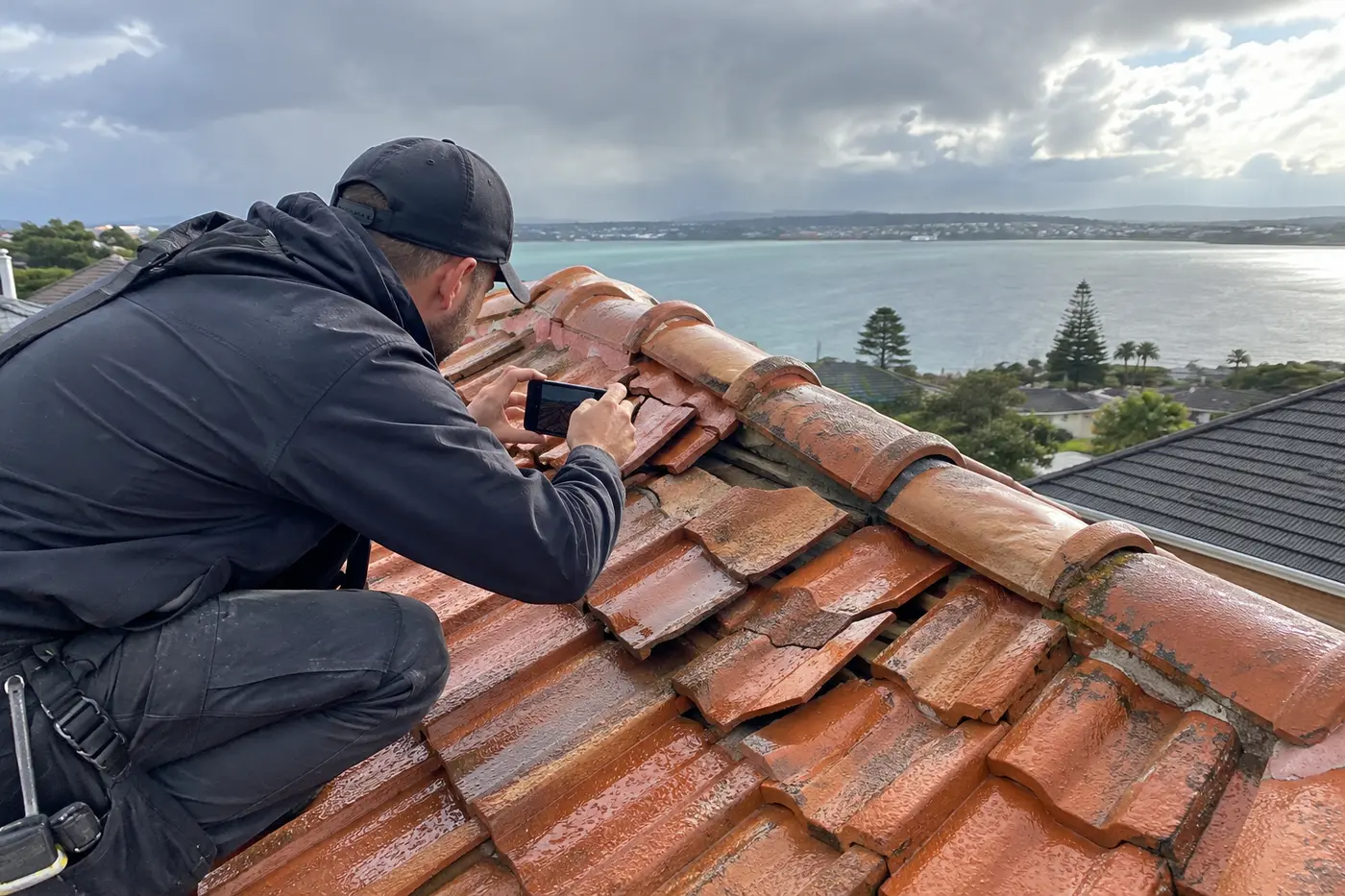
- cracked or missing pointing along the ridge capping on tile roofs
- rusted valley iron that has thinned out where water runs hardest
- roofing screws and sheet laps corroded by salt air, which is constant this close to the coast
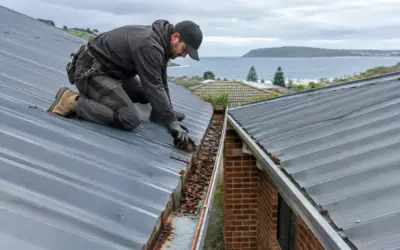
- gutters packed with leaves, so water backs up under the roof edge instead of running off
- flashings that have lifted or lost their seal around chimneys, vents and walls
None of those are caused by one night of wind. They are maintenance items, and an assessor who finds them will usually class the leak as wear and tear. The storm was just the first time enough water hit the weak spot at the right angle.
Real storm damage tends to look different. Tiles lifted or snapped by wind. A branch through the sheeting. Hail fractures across a run of tiles. Metal sheets or ridge capping peeled back. When we see that, it is usually obvious, and it is fresh: clean breaks, no rust staining, no moss growing in the cracks.
One more thing worth knowing. A ceiling stain is not always the roof at all. If the water could have come from a shower, hot water system or a pipe in the ceiling, that changes which part of the policy applies. Our guide on telling a roof leak from a plumbing leak walks through how to tell the difference.
The roof and the ceiling can be treated separately
Insurers often split a claim into two parts: the thing that failed and the damage it caused. A roof that leaked through worn pointing may not be covered, but some policies will still respond to the resulting damage inside, like a collapsed ceiling, wet insulation or ruined carpet. Others won’t.
This varies a lot from policy to policy, so read your Product Disclosure Statement or ask your insurer directly how they treat resultant damage. It is a question worth asking before you assume the whole thing is declined.
What to do in the first 48 hours
What you do straight after the leak can affect both the claim and how much damage you end up with.
Make it safe first. If water is coming through near a light fitting or a ceiling fan, turn the power off at the switchboard. A sagging, water filled ceiling can come down without much warning, so keep people out from under it. And please don’t climb onto a wet roof. Tiles and metal are both slippery when wet, and it isn’t worth the fall.
Photograph everything. The ceiling, the stain, the wet floor, any debris in the yard, any tiles or sheets you can see out of place from the ground. Date stamped photos taken on the day are far more useful than anything you try to piece together a week later.
Call your insurer early. Lodge the claim or at least notify them quickly. Ask whether they want to send their own assessor and whether they are happy for you to arrange an emergency make safe repair in the meantime.
Stop further damage. Most policies expect you to take reasonable steps to stop things getting worse. A tarp over the damaged section or a temporary fix to stop the water is normally part of that. Keep receipts and keep any broken tiles or damaged material until the insurer says you can throw them out.
A good roofer’s report states the cause, plainly
Whether the insurer sends an assessor or asks you for a quote and report, the roofer’s findings carry a lot of weight. A useful report covers:
- where the water is getting in, with photos
- what caused it, in plain terms
- the general age and condition of the roof around the damage
- what is needed to fix it, and whether that is a repair or a bigger job
We write down what we find. If a branch has smashed through the tiles, the report says so. If the leak is coming through a valley that has rusted through over years, it says that too. We know that isn’t always what people hope to hear, but a report that stretches the truth tends to come apart once an assessor gets on the roof, and it puts the whole claim at risk.
Our roof repair team in Shellharbour can attend, find the entry point, stop the water and give you that written assessment to pass on to your insurer. After more than 10 years on tile and metal roofs, we can usually tell storm damage from long term wear fairly quickly.
If the claim is declined, the roof still needs fixing
A declined claim is frustrating, but don’t let it turn into a reason to leave the leak. Water that keeps getting in will soak and stain ceilings, wet the insulation, rot timber battens and eventually bring plaster down. Mould follows. A repair that might have been a few hours of work becomes a much bigger job.
If you think the decision is wrong, ask the insurer for their reasons in writing and a copy of the assessor’s report. Every insurer has an internal complaints process, and if that doesn’t resolve it, the Australian Financial Complaints Authority (AFCA) handles disputes for free. A second, independent roof report can help if the cause is genuinely unclear.
If you’re still not sure where the water is coming from, our article on the usual reasons a roof starts leaking covers the common culprits in more detail.
Maintenance is the cover you control
Because wear and tear is the most common reason a roof leak claim fails, the best protection is a roof that doesn’t have obvious wear for an assessor to find. That means clearing gutters before the wetter months, replacing cracked pointing and broken tiles when they are small jobs, and keeping an eye on valleys, screws and flashings on homes close to the water, where salt works faster.
If you have a leak now, or you want the roof checked before the next big storm, book a visit with our local roof repair service. We will tell you what we find and what it will take to fix it, without the sales pitch.
Common questions about roof leaks and insurance
Does home insurance cover roof leaks in NSW?
Usually only when the leak was caused by an insured event such as a storm, hail or a falling tree. Leaks from wear and tear, rust, poor maintenance or faulty workmanship are commonly excluded. The exact terms depend on your own policy, so check the Product Disclosure Statement.
Which kind of roof damage is not covered by home insurance?
The usual exclusions are gradual deterioration, rust and corrosion, wear and tear, lack of maintenance and damage from poor workmanship. On a tile roof that often means cracked pointing or perished valleys. On a metal roof it is often corroded screws or rusted sheets.
What happens if a roof leak is left untreated?
Water keeps soaking into ceilings, insulation and roof timbers. Over weeks and months that leads to stained or sagging plaster, rotting battens, mould and sometimes a ceiling collapse. It can also hurt a future claim, because damage you knew about and didn’t address is often treated as a maintenance issue.
Will insurance pay for a whole new roof?
Generally an insurer pays to repair the damage caused by the insured event, not to upgrade or replace a roof that was already near the end of its life. If the storm damage is widespread enough that replacement is the only sensible fix, that becomes a conversation between you, the insurer and the assessor.
Should I get the leak repaired before the assessor comes?
Talk to your insurer first, but most expect you to stop further damage, so a temporary make safe repair like a tarp is normally fine. Take plenty of photos before any work starts, keep the receipts and hold onto damaged tiles or sheeting until the insurer says otherwise.
Do I need a roofer’s report for an insurance claim?
Many insurers will either send their own assessor or ask you for a roofer’s report and quote. A good report shows where the water gets in, what caused it and what the repair involves, with photos. That gives the insurer clear evidence to make a decision on.