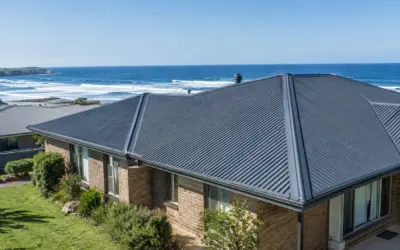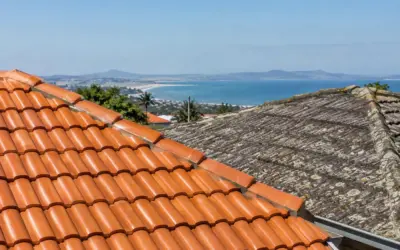
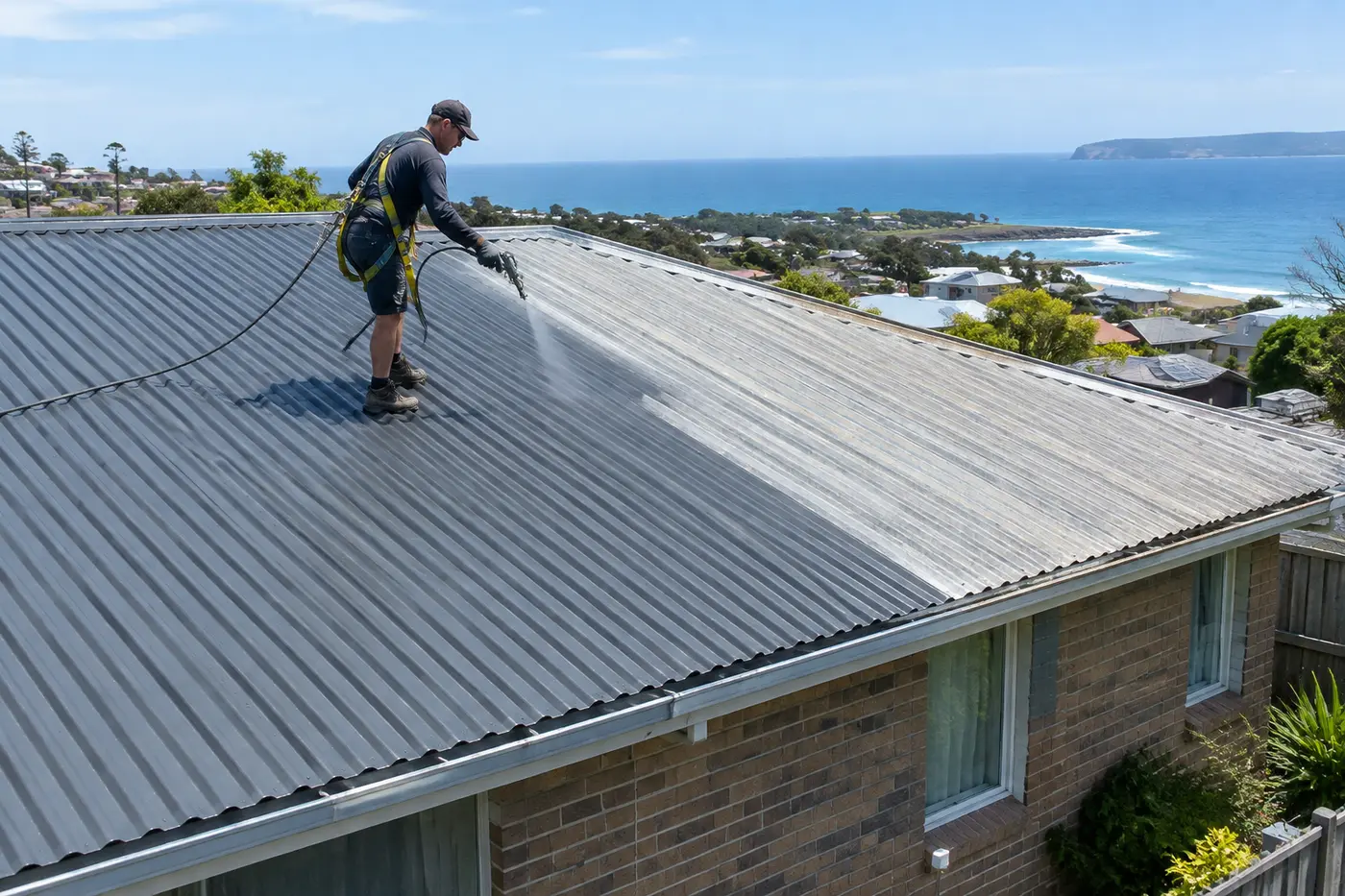
It’s a call we get a lot. The Colorbond roof has a few decades on it, the colour has gone chalky and pale on the side that takes the sun, and someone has quoted to respray it. Is Colorbond roof painting worth the money, or is it a way to dress up a roof that really needs replacing?
Our honest answer was that it depends on what’s under the fade. That’s what this guide covers: when painting a Colorbond roof makes sense, when it doesn’t, and what a proper job involves so you can judge any quote you get.
Faded is not the same as failing
Colorbond is steel with a metallic coating (a zinc and aluminium alloy) and a baked paint layer on top. The paint is the part you see, and it’s the part the sun attacks first. After enough years of UV, the surface oxidises and leaves a fine white powder. Run your finger across a faded sheet and it comes away chalky. That’s called chalking, and on its own it’s cosmetic.
The layers that actually protect the steel sit underneath. If the metallic coating is still intact, a good coating system can bring the colour back and add another layer of defence. If the steel itself has started to rust through, paint just hides the problem for a season or two.
So before anyone talks colours, the first job is working out which of those two roofs you have.
Three checks we do before recommending paint
When we get up on a faded metal roof, we look past the colour. These are the things that decide whether painting is a sensible spend.
Rust: surface spots or holes?
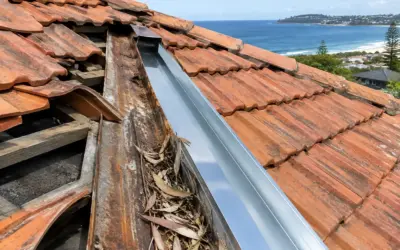
Light surface rust around screw heads or along the bottom edge of sheets can be wire brushed, treated and primed. Rust that has eaten through, or sheets that flex and crackle underfoot, can’t. On coastal homes we pay close attention to the overlaps between sheets and the gutter ends, because salt sits there and does its damage out of sight. If corrosion has gone that far, read our guide on whether a metal roof can be repaired or needs replacing before you spend anything on paint.
Screws and fixings
Older roofs often have screws with perished rubber washers. Each one is a small leak waiting for the next southerly. Painting over them seals nothing for long. Any decent paint job replaces failed screws first, and that should be written into the quote.
Flashings, valleys and ridge capping
Paint won’t fix a flashing that has lifted or a valley that’s rusting from underneath. If those are leaking, they need repair or replacement before the roof is coated. Otherwise you end up with a fresh colour and the same wet ceiling.
If all three checks come back fine, painting is often a good result. If two of them don’t, we’ll usually suggest putting the money towards a new roof instead. We’d rather give you the facts and let you decide than sell you a coating that won’t last.
Most of a proper paint job is preparation
The spraying is the quick part. A job done properly runs roughly like this:
- A high pressure clean to strip dirt, mould, lichen and the chalky oxidised layer. Paint laid over chalk peels.
- Repairs: failed screws replaced, surface rust treated, loose flashings refixed.
- A primer made for metal roofing, so the new coat bonds to the slick factory finish.
- Two topcoats of a membrane made for metal roofs, usually applied with an airless sprayer.
- Gutters, fascias and downpipes done at the same time if you want everything to match.
Weather matters more than people expect. Paint needs a run of mild, dry days to cure. In the Illawarra that means watching for sea fog, heavy dew and the afternoon storms that roll in over summer. A crew that sprays on a damp morning just to stay on schedule is a crew to be wary of.
This is the work our roof painting team does on metal and tile roofs across the Shellharbour area, and it’s why we want the prep steps spelled out before any work starts.
Salt air changes the maths near the beach
Homes in Shell Cove, Barrack Heights and Warilla cop salt spray that inland suburbs like Albion Park mostly don’t. Salt doesn’t just fade paint faster. It settles in the places rain can’t rinse, like under the eaves, between overlapping sheets and behind the gutters.
That has two consequences. First, a coastal roof needs a closer inspection before painting, because the hidden corrosion is often worse than the visible fade suggests. Second, the coating matters. Ask the painter what product they use and whether it’s rated for marine environments. If they can’t answer, that tells you something.
If you end up replacing rather than painting, the sheet you choose matters just as much. Our comparison of standard Colorbond and Colorbond Ultra for coastal homes explains which one suits a roof close to the water.
Paint or replace: how we usually call it
There’s no single age where a Colorbond roof stops being worth painting. We judge it on condition. In plain terms:
- Faded and chalky, sheets solid, minor surface rust: a good candidate for painting.
- Faded, with failed screws and a few tired flashings: paint after repairs, if the sheets are sound.
- Rust through the sheets, widespread corrosion at the laps, or repeated leaks: replace.
- Selling soon and only after street appeal: painting can make sense, but be upfront with buyers about the roof’s age.
One thing worth knowing about warranties. Any warranty that came with the original steel covers the manufacturer’s factory finish. Once a roof has been coated on site, you’re relying on the paint maker’s product warranty and your painter’s workmanship guarantee instead. Ask for both in writing before work starts.
We’ve worked on tile and metal roofs for more than 10 years, and the roofs that disappoint after painting are nearly always the ones that should have been replaced. A clear inspection at the start avoids that.
Common questions about painting a Colorbond roof
Can you paint a Colorbond roof?
Yes. Colorbond can be painted as long as the surface is cleaned back to sound paint, the chalky layer is removed and a primer made for metal roofing goes on first. The bigger question is whether the steel underneath is still in good enough shape to be worth coating.
How long will roof paint last on a metal roof?
It depends heavily on the product, the prep and how exposed the roof is. A roof that faces the sea and the afternoon sun wears faster than a sheltered one inland. Ask your painter which product warranty applies and exactly what it covers.
Can I paint my Colorbond gutters at the same time?
You can, and most people do so the colours match. Gutters get the same clean and prime as the roof. If they’re rusted through at the joins or sagging, though, replacing them usually makes more sense than painting.
How do I remove mould from a Colorbond roof?
A soft wash with a suitable roof cleaner and a gentle rinse deals with most mould and lichen. Avoid scrubbing hard or blasting at close range, which can damage the factory finish if you aren’t repainting. Before a repaint, a pressure clean removes it as part of the prep.
Can I paint a Colorbond roof myself?
Some people do, but working at height on a metal roof is genuinely dangerous, and the prep is where DIY jobs usually fall short. Paint that goes over chalk, rust or failed screws won’t last. If you’re set on doing it yourself, at least get the roof inspected first so you know what needs fixing.
Does painting a metal roof stop leaks?
Not reliably. Most leaks on metal roofs come from screws, flashings, valleys or rusted laps, and paint doesn’t repair any of those. Fix the leak first, then paint.
Get a straight answer on your roof
If your Colorbond roof has faded and you’re not sure paint will fix it, we’ll inspect it and tell you plainly whether it’s a painting job or a replacement. Have a look at our Colorbond and tile roof painting service and ask for a free quote.