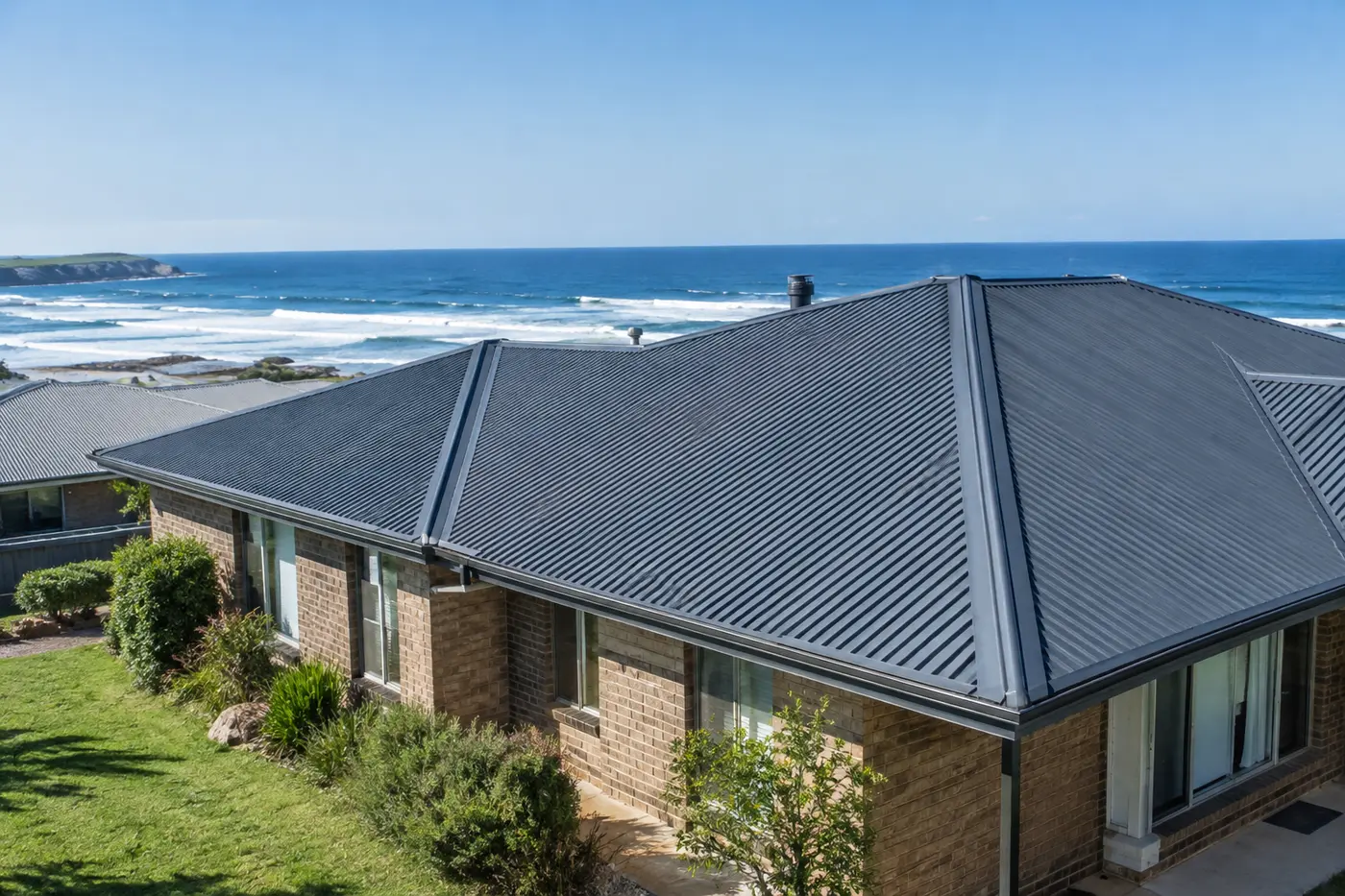
A homeowner in Shell Cove asked us a fair question last month. They’d had two quotes for a new steel roof, and one was noticeably dearer because it specified Colorbond Ultra. Same colour, same profile, and from the footpath you would never pick the difference. So was the extra money buying anything, or was it padding?
The honest answer is that it depends almost entirely on where the house sits. Colorbond Ultra vs Colorbond is not a question of better and worse. It is a question of which steel is matched to your exposure, and in a region like ours, with ocean beaches on one side and Lake Illawarra on the other, that varies a lot from one street to the next.
The difference is under the paint, not on it
Both products are made by BlueScope and both are pre-painted steel. The layers look much the same on paper: a steel base, a metallic coating of aluminium, zinc and magnesium, a pre-treatment, a primer and a baked paint finish on top.
What changes with Ultra is the metallic coating. It is heavier. That coating is what actually stops the steel from rusting once salt starts working on it, so a thicker layer buys more time in harsh air. The paint you see is not the main defence. It’s the colour and the first line of protection, and on a coastal roof it gets worn and scratched over the years. When that happens, the coating underneath is what decides whether you get a long life or early rust.
Two practical differences follow from that. Ultra costs more, because there is more metal in the coating. And it comes in a smaller colour range than standard Colorbond, so if your heart is set on a particular shade, check it is offered in Ultra before you settle on the grade.
Salt in the air is what decides it
BlueScope publishes guidance on which product suits which location, and it is based on distance from the water. It treats breaking surf and calm water separately, because a beach with rolling waves throws far more salt spray into the air than a still lake or harbour does. It also treats heavy industrial areas as their own category.
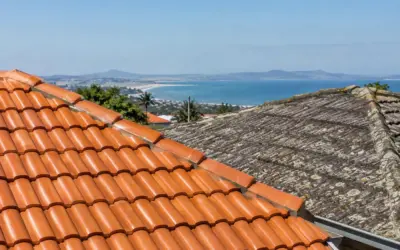
That matters around here more than most places. A house in Warilla or near Shellharbour’s ocean beaches is dealing with breaking surf. A house on the edge of Lake Illawarra is near calm water, which is gentler, but being right on the shore still counts. And a house a few kilometres inland at Albion Park is usually well clear of both.
Distance is the starting point, not the whole story. Over the years we’ve found a few things that push a roof towards Ultra even when the tape measure says it’s borderline:
- Nothing between the house and the water, such as a clear view straight over the dunes or a reserve
- High or exposed sites on a ridge where the onshore wind hits the roof directly
- Big sheltered areas that rain never rinses, like deep eaves, verandah roofs and the undersides of gutters
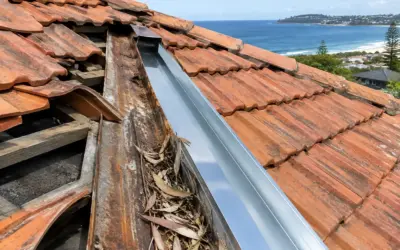
That last one surprises people. Rain is actually good for a coastal roof because it washes the salt off. The parts that stay dry, tucked under an overhang, collect salt and moisture and stay damp. They are where we see corrosion start first on houses near the beach, often years before the open roof shows anything.
When standard Colorbond is the right call
For most homes in the Shellharbour area, standard Colorbond is the right steel. If you are a reasonable distance back from the surf, it is designed for exactly your conditions, it gives you the full colour range, and paying for Ultra would be paying for protection the house doesn’t need.
We’d rather tell you that than sell you the dearer sheet. That’s the whole point of how we work: we give you the facts about your roof and your site, then you decide. If a quote specifies Ultra for a house in an inland suburb, it’s worth asking the roofer why.
If you’re still weighing up plain metal options, our post on choosing between Zincalume and painted Colorbond covers that earlier decision.
When Ultra earns its extra cost
If your house is close to breaking surf or right on the edge of calm water, Ultra is not an upgrade. It’s the correct product. Using standard Colorbond in a location the manufacturer says needs Ultra can affect what the warranty covers, and that is not a conversation you want to have after the edges start to bubble.
The same applies to homes close to heavy industry, since airborne fallout from industrial sites attacks steel in a similar way to salt. If you’re unsure which category your street falls into, that’s something we check when we look at the job.
In these spots, the extra spend is small next to the cost of replacing a roof early. We usually put it this way: you are buying the steel once, so buy the one built for your air.
The gutters and flashings have to match
Here is where some coastal re-roofs go wrong. The roof sheets get specified in Ultra, but the gutters, ridge capping, flashings and screws are standard grade, or worse, a mix of metals that don’t get along.
On an exposed site, the whole roof system should be matched to the conditions. Flashings and gutters often corrode before the sheets do, because they have cut edges, sit in the wet and include those unwashed undersides we talked about. Fasteners matter too. A cheap screw rusting in the middle of an Ultra sheet leaves a stain and, eventually, a leak.
Some metals also react badly with Colorbond when water runs from one onto the other. Lead flashing and copper are the usual culprits. Old lead flashings left in place during a re-roof, or copper pipes draining onto the steel, can cause corrosion that has nothing to do with the grade you chose. We look for these on every job.
When we quote a metal roof replacement near the coast, we price the sheets, gutters, flashings and fixings as one system for that reason. It makes quotes easier to compare too, because you can see whether everyone is pricing the same thing.
A little washing goes a long way
Whichever grade you choose, a roof close to the sea lasts longer with some basic care. The areas rain can’t reach should be hosed down regularly to rinse off the salt. Gutters need to be kept clear so leaves and grit don’t hold salty water against the steel. And it pays to keep an eye on scratches and cut edges after other trades have been up there, such as solar or antenna installers.
This upkeep is also part of what BlueScope expects for its warranties, so it’s worth doing even on a brand new roof.
If you’re replacing old tiles with steel and working through the whole decision, our guide to what’s involved in switching from tiles to Colorbond walks through the process from start to finish.
Not sure which grade your house needs?
Roofing Shellharbour is led by Ryan Bruce, who has more than 10 years of experience on tile and metal roofs across the region. When we look at your home, we’ll tell you which steel suits your site and why, and you’ll see exactly what is being priced. If a new steel roof is on the cards, start with our metal roof replacement service and we’ll take it from there.
Common questions about Colorbond Ultra
Can you tell Colorbond Ultra from standard Colorbond by looking at it?
Not from the street. The difference is in the metallic coating under the paint, so the two look the same once they’re on the roof. The product name is printed on the underside of the sheets, and your roofer’s quote and invoice should state which grade was used.
Is Colorbond Ultra worth the extra cost?
It is if your home is close to breaking surf, right beside calm water like Lake Illawarra, or near heavy industry. For houses set well back from the coast, standard Colorbond is designed for the conditions and the extra cost buys little. Your exact location and exposure should decide it.
How many years does a Colorbond roof last?
It depends heavily on matching the grade to the site and keeping up basic maintenance. A standard sheet in a harsh beachfront spot will wear out much sooner than the same sheet inland, which is the whole reason Ultra exists. Check BlueScope’s current warranty terms for your address, since they vary by location.
Do all Colorbond colours come in Ultra?
No. Ultra is offered in a narrower range of colours than standard Colorbond. If you have a specific colour in mind and your house needs Ultra, confirm it’s available before you lock in the design.
Can Colorbond touch other metals like zinc, lead or copper?
Some combinations cause corrosion, especially where water runs from one metal onto another. Lead and copper are the common problems with Colorbond. A good roofer will remove or isolate incompatible materials during the job rather than leaving old flashings in place.