You are lying in bed listening to rain hammer the roof, and there it is: a soft brown ring spreading across the ceiling, or a steady drip landing in a saucepan on the hallway floor. It is stressful, and the first question everyone asks is the same one. Why is my roof leaking now, when it was fine last week? If you are looking into roof leak repairs in Shellharbour, the honest answer is that a leak almost never starts the day you notice the stain. It has usually been building quietly for months.
We look at leaking roofs across the Illawarra most weeks, and the water is rarely coming in where you think it is. Let me walk you through what we actually find, what you can do tonight, and when a leak has stopped being a nuisance and become urgent.
Where the water actually gets in
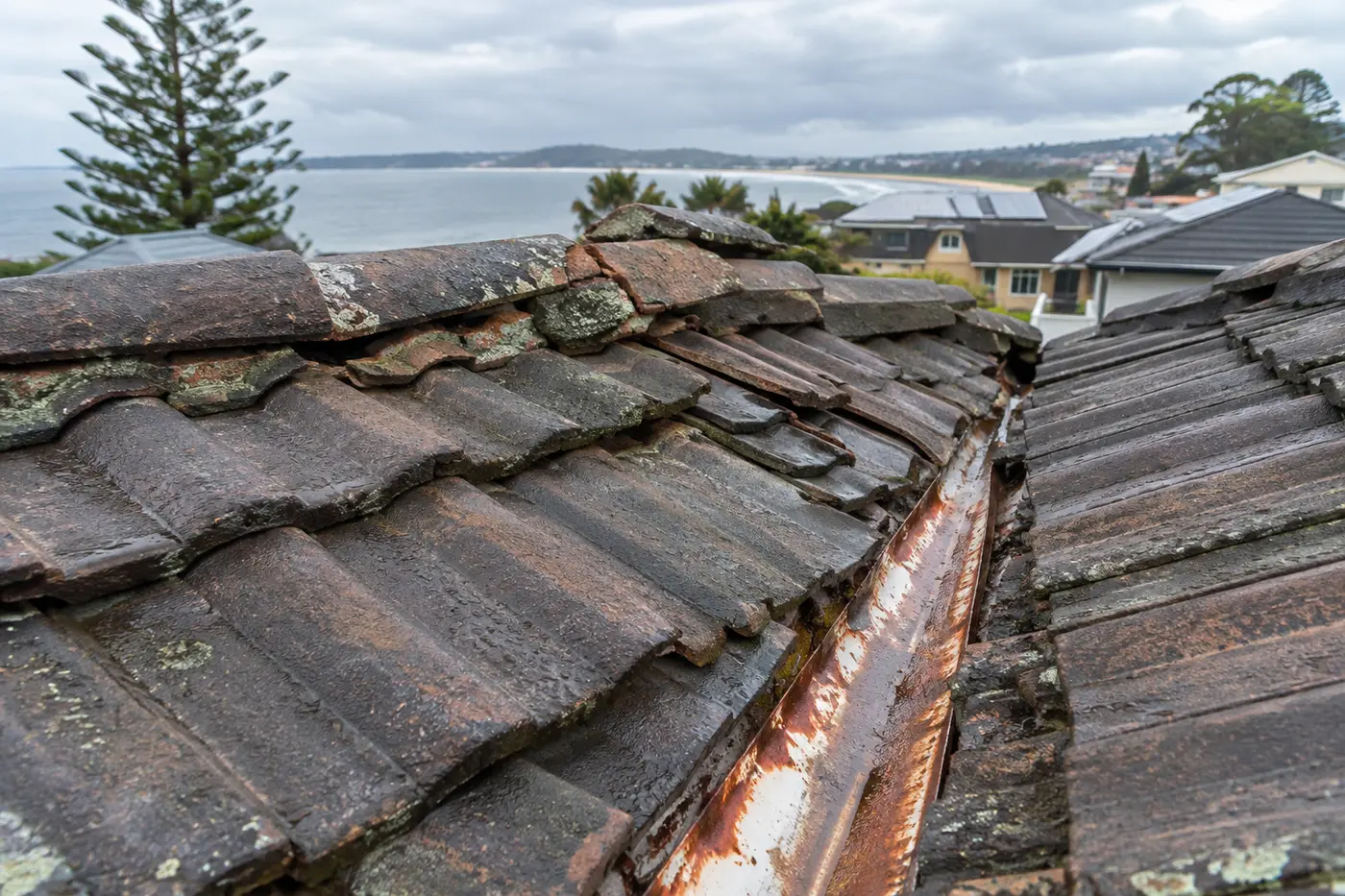
Roofs here take a beating. Salt air off the coast, driving rain from the south, and long hot spells that dry everything out and crack it. On the tile and metal roofs we see around Shellharbour, leaks nearly always trace back to one of a handful of spots.
- Cracked or slipped tiles. A single hairline crack, or one tile that has slipped a few millimetres, is enough. Foot traffic, falling branches and age all do it.
- Failed flashing. Flashing is the metal that seals the joins around chimneys, skylights, vents and where the roof meets a wall. When it lifts, rusts or the sealant perishes, water runs straight past it.
- Worn valleys. The valley is the metal channel where two roof slopes meet. It carries a huge volume of water, so once it rusts through or fills with debris, it leaks fast.
- Cracked pointing and ridge capping. The mortar along the ridges and hips dries out and cracks over the years, and the gaps let water track underneath.
- Blocked or overflowing gutters. When gutters clog, water backs up under the first row of tiles or the roof edge instead of running away.
- Old fasteners on metal roofs. The rubber washers under roofing screws perish in the sun. Once they go, every screw is a tiny open hole.
Why it only leaks when the rain is heavy
This one catches people out. A roof can be perfectly dry through light showers and then leak like a sieve in a proper storm. That is normal, and it tells us something useful. In light rain the water drains away before it can find the weak spot. In a downpour, the volume overwhelms a blocked gutter or a tired valley, or wind drives the rain sideways under a lifted flashing. So a leak that only shows up in the worst weather is not a good sign that the roof is mostly fine. It usually means the fault is right at the edge of failing.
The leak is almost never directly above the stain
Water is sneaky. It comes through a gap up high, runs along a batten or a rafter, and drips down somewhere completely different, often a metre or two away from where it got in. That is why chasing a stain on the ceiling and sealing the roof directly above it so often fails. Finding the real entry point takes getting up into the roof cavity with a light during or just after rain and tracing the path back. It is the part most people cannot safely do themselves, and it is the part that actually matters.
What to do the moment you spot a leak
A few simple things protect your home while you wait for someone to get out and look.
- Move furniture, electronics and anything valuable out from under the drip.
- Put a bucket down, and if the ceiling is bulging with trapped water, pierce it with a screwdriver at the lowest point to let it drain in a controlled way. A sagging plasterboard ceiling that lets go all at once does far more damage.
- Switch off the power to that part of the house if water is anywhere near lights or wiring.
- Take photos of everything, inside and out. You will want them if you end up making an insurance claim.
What you should not do is climb up on a wet roof to investigate. Coastal roofs are slippery when damp and the fall risk is real. Note where and when it drips, then leave the diagnosis to someone with the gear to do it safely.
When a leak can’t wait
Not every leak is an emergency, but some are. Call straight away if water is running near electrical fittings, if the ceiling is sagging or bulging, or if the drip has gone from an overnight annoyance to a steady stream. Left alone, even a small leak rots roof timbers, ruins insulation and grows mould inside the cavity where you cannot see it. A tile you could have replaced for very little turns into a repair that involves plaster, paint and framing. Acting early is almost always the cheaper path. If you are weighing up whether it is urgent, our team can talk it through on the phone and tell you honestly whether it needs someone today or can wait for the next dry day. Our full roof leak repair service covers both.
Will insurance cover it?
Sometimes. As a rule, home insurers cover sudden, one-off damage, like a tree branch punching through the roof in a storm, but not gradual wear that was left to get worse. That is where those photos help, and why a proper written inspection matters. If a storm caused the damage, an assessor will want evidence of what happened and when. If the leak is down to years of perished flashing or cracked pointing, that is usually treated as maintenance and falls on you. We can document what we find either way so you have something solid to hand your insurer.
How we track down and fix a leak
Roofing Shellharbour is run by Ryan Bruce, who has spent more than 10 years on tile and metal roofs across the region. We work on a decision-first basis, which means we find the actual source, show you what is going on, and give you the options in plain terms before anyone talks about cost. Sometimes the fix is a couple of tiles and fresh pointing. Sometimes it is a rusted valley or a run of tired flashing, and replacing worn flashing solves it for good. Either way you will know why it leaked and what stops it happening again. If you want the broader picture on keeping a coastal roof sound, our guide to protecting your home from coastal wear is a good next read.
If your ceiling is stained or you have caught a drip in the last storm, do not wait for it to spread. Call Roofing Shellharbour on (02) 4215 8188 or ask about our roof repair service for a free quote, and we will find where the water is really getting in.
Common questions about roof leaks
Is a leaking roof an emergency?
It can be. If water is near lights or wiring, the ceiling is sagging, or the drip has turned into a stream, treat it as urgent and get someone out fast. A slow stain from light rain is less pressing, but it still needs looking at before the next big storm makes it worse.
When should I worry about a roof leak?
Any leak that keeps coming back, spreads across the ceiling, or shows up with mould or a musty smell is worth worrying about. Those are signs water has been getting in for a while and is now sitting in the roof cavity, where it damages timber and insulation you cannot see.
What happens if I leave a roof leak untreated?
A small leak rarely stays small. Over time it rots battens and rafters, soaks insulation so it stops working, stains and cracks ceilings, and grows mould. A cheap tile-and-pointing fix can become a job involving framing, plaster and paint if it is ignored for a season or two.
Is it expensive to fix a roof leak?
It depends entirely on the cause. A cracked tile and some fresh pointing is a small job. A rusted valley, failed flashing across a whole join, or water that has already damaged the ceiling costs more. This is exactly why finding the real source early keeps the bill down. We give you the options before any work starts.
Why does my roof only leak in heavy rain?
In light rain the water drains away before it reaches the weak spot. A downpour overwhelms a blocked gutter or worn valley, and strong wind drives rain sideways under lifted flashing. A roof that only leaks in a storm usually has a fault that is close to failing, not one that is nearly fine.
Who do I call for a leaking roof in Shellharbour?
A licensed local roofer who can safely get up and trace the leak to its source. Roofing Shellharbour handles tile and metal roof leaks across Shellharbour, Shell Cove, Oak Flats, Albion Park and the surrounding suburbs. Call (02) 4215 8188 and we will tell you whether it needs attention today.